
Structured review
EditorialEditorial4 min read
Perplexity Review (July 2026): Pricing, Features, Comet, and Computer
An independent, sourced July 2026 review of Perplexity. Pricing, Pro vs Max, Comet browser, Perplexity Computer, controversies, alternatives, and who should use it.

Deep dive
Full review
Perplexity Review (July 2026): Pricing, Features, Comet, and Computer
Research-based assessment notice. I could not run a personal hands-on test against the live Perplexity product for this July 2026 update. Every product, pricing, and feature claim below is dated and traced to a primary or independent source. Where I lean on independent reporting rather than first-hand use, I say so.
What is Perplexity?
Perplexity is an American AI company that runs an answer engine: a chat-style search product that returns a written response with inline citations to the web pages it pulled from. It was founded in August 2022 by Aravind Srinivas, Denis Yarats, Johnny Ho, and Andy Konwinski, and its main search engine launched on 7 December 2022 (Wikipedia: Perplexity AI; Perplexity Blog, “Introducing Perplexity Computer,” 25 Feb 2026). A free web version sits next to paid Pro, Max, and Enterprise tiers, and the company has built a browser (Comet), an agentic platform (Computer), and a developer API on top of the same retrieval stack.
Perplexity pricing in July 2026
Perplexity’s consumer pricing in July 2026 is a three-tier stack. The numbers and tier names below are taken directly from the official pricing page fetched on 31 July 2026.
| Plan | Price (as of 31 July 2026) | Best for | Headline inclusions |
|---|---|---|---|
| Free | $0/month | Casual questions, evaluating the product | Search with citations, basic models, limited daily usage |
| Pro | $20/month | Regular research work | 4,000 bonus credits, 5+ model selection, premium databases, Perplexity Computer, Model Council, file uploads, limited Comet |
| Max | $200/month | Heavy, sustained research | 35,000 bonus + 10,000 monthly credits, highest model access, advanced reasoning, 5x video generation, more Computer, 10x Comet Agent |
Source: Perplexity Pricing page (accessed 31 July 2026). Enterprise pricing is custom and sold via Perplexity’s enterprise team (Perplexity Enterprise).
A few things to flag about the pricing stack, because the marketing copy can be slippery:
- “Bonus credits” and “monthly credits” are usage-based, not unlimited. Heavy users buy more.
- Pro and Max add access to premium data sources like PitchBook, Statista, and S&P Capital IQ for finance and market-intelligence work (Perplexity Pricing page).
- The free tier is real and useful for a first look, but the company itself describes it as “limited daily usage” for “simple questions.”
Perplexity features, in plain language
Perplexity’s product surface in mid-2026 is broader than “search with citations.” Here is what each piece actually does, in my reading of the company’s own materials.
Search and Deep Research
The core product takes a question, runs live web searches, and writes an answer with numbered footnotes that link out. Deep Research is the longer-form mode that produces a multi-section report instead of a single reply. Perplexity positions it as a competitor to OpenAI and Google’s deep-research modes (Perplexity Blog, 14 Feb 2025).
Model Council and multi-model orchestration
Rather than locking you to one model, Perplexity now exposes a “Model Council” that picks the best frontier model per step of a task. In the launch post for Perplexity Computer, the company says it runs Opus 4.6 for core reasoning, Gemini for deep research, Nano Banana for images, Veo 3.1 for video, Grok for lightweight tasks, and ChatGPT 5.2 for long-context recall (Perplexity Blog, 25 Feb 2026). I find that the honest framing is “Perplexity is a harness, not a single model,” and the company is leaning into that.
Perplexity Computer
Perplexity Computer is the company’s agentic platform, launched 25 February 2026. The marketing line is that Computer “operates the software stack just like a human co-worker would,” with sub-agents for research, document generation, API calls, and coding, running asynchronously in isolated compute (Perplexity Blog, 25 Feb 2026). It is gated behind Max today, with a Windows version called Personal Computer that launched on 28 July 2026 for Pro, Max, and Enterprise subscribers (Perplexity Blog, “Personal Computer is now available on Windows,” 28 Jul 2026).
Comet browser
Comet is Perplexity’s Chromium-based AI browser. It launched in July 2025 behind the most expensive tier, then went free for everyone in October 2025 (Wikipedia: Perplexity AI; Lifehacker via Wikipedia ref). The browser bakes the answer engine into address-bar queries, page summaries, and an agent (“Comet Assistant”) that can take actions in tabs. A mobile version and an iOS version followed through late 2025 and early 2026 (Perplexity Blog index).
Internal Knowledge Search and connectors
Pro and Enterprise users can index internal files (PDF, Word, Excel) and search them alongside the open web, with 400+ app connectors for tools like Salesforce, Snowflake, and HubSpot (Perplexity Blog, “Personal Computer is now available on Windows,” 28 Jul 2026; VentureBeat via Wikipedia ref). This is where the product stops being a search toy and starts to look like a workplace tool.
Developer API (Sonar, now Agent API)
Perplexity sells a Search API called Sonar, which developers can hit to get cited answers from inside their own apps. The company has been repositioning Sonar toward an “Agent API” for search-augmented agents (Perplexity API Platform; Perplexity API docs).
How accurate is Perplexity, really?
Perplexity’s own accuracy post is the most useful primary source here. The company is candid that it is not 100% accurate and that it trains its models to put correctness before style (Perplexity Blog, “How Perplexity Builds Accuracy into Frontier AI,” 22 Apr 2026). That framing is important: Perplexity is best understood as a tool that produces a good first draft with sources attached, not a tool that hands you a finished fact.
Independent reporting has been sharper. A 2024 Wired investigation found that Perplexity’s chatbot regularly produced summaries that paraphrased paywalled reporting it had been asked not to access, and in some cases produced confidently wrong claims that it could not have read the underlying article (Wired, “Perplexity Is a Bullshit Machine,” 19 Jun 2024). Cloudflare’s research team published a separate technical report in August 2025 concluding that Perplexity was rotating user agents and IP ranges to crawl sites that had explicitly asked it not to, and de-listed Perplexity as a verified bot (Cloudflare Blog, 4 Aug 2025).
Evidence-backed callout. Wired documented cases where Perplexity summarized articles it had been blocked from, and Cloudflare documented stealth crawling behavior. Perplexity denied the framing but the core technical findings have not been publicly retracted. Treat the citations as a reading list, not a verdict (Wired, 19 Jun 2024; Cloudflare Blog, 4 Aug 2025).
For a research workflow, the practical takeaway is: open the links, do not paste the answer into a client deck, and use Perplexity as a research surface, not a primary source.
How Perplexity compares to the alternatives in 2026
I am relying on the companies’ own positioning and the public feature lists, because I have not run a side-by-side test. Use this as a map, not a leaderboard.
| Tool | Strength vs. Perplexity | Weakness vs. Perplexity |
|---|---|---|
| ChatGPT (OpenAI) | Stronger at long-form writing, code, and multimodal reasoning; ChatGPT Agent adds browser actions | Less consistent inline citations; weaker first-pass web research |
| Claude (Anthropic) | Better at long-context reading, code, and document analysis; refuses ads outright | No live web by default in the consumer app (MacRumors, 18 Feb 2026) |
| Gemini (Google) | Deep Google Search integration, Workspace hooks, free tier is generous | Citations are often less prominent; ad-supported answers in AI Overviews |
| Kagi (paid) | Ad-free, human-curated web index; strong privacy stance | Smaller user base, no answer-engine layer by default |
| You.com / Andi / Phind | Each has a niche (shopping, privacy, dev search) | Smaller scale, fewer enterprise controls |
If you want the receipts before you switch, the Perplexity Blog publishes feature announcements with dates, and the Perplexity changelog tracks smaller updates. The competitor capabilities above are summarized from each vendor’s public product pages; I have not run a side-by-side benchmark.
Perplexity controversies to know before you sign a contract
The legal and ethical record is part of the product. Three threads matter for a buyer in mid-2026.
- Copyright lawsuits from publishers. Dow Jones and the New York Post sued in 2024 over content reproduction and hallucinated quotes. The New York Times sent a cease-and-desist in October 2024. In 2025, the BBC threatened legal action, and three Japanese newspapers (Yomiuri Shimbun, Asahi Shimbun, Nikkei) filed suits. Reddit sued in October 2025 (Wikipedia: Perplexity AI).
- Stealth crawling. Cloudflare’s August 2025 report concluded that Perplexity used undeclared crawlers that ignored robots.txt when its declared bots were blocked (Cloudflare Blog, 4 Aug 2025). Perplexity called the report a “charlatan publicity stunt” (Wikipedia: Perplexity AI). For enterprise buyers, this is the line that matters most.
- Strategic shifts. In February 2026 the company publicly backed away from in-product advertising, citing trust concerns, while OpenAI began showing ads in ChatGPT (MacRumors, 18 Feb 2026). That is good news if you worry about ad-influenced answers, and an open question about how the company will fund the next leg of compute spend.
Pros and cons
I am listing these against my research notes, not against a hands-on test.
Pros
- Citations in every answer, with the source page linked inline, which raises the floor of any research workflow.
- Multi-model orchestration (Model Council) means you are not betting on one model family.
- Mature free tier for evaluation; Pro at $20/month is competitive with ChatGPT Plus and Claude Pro.
- Serious enterprise footprint: 50,000+ organizations, SOC 2 Type II, GDPR, HIPAA claims, SSO/SCIM, audit logs (Perplexity Enterprise).
- Comet browser is a credible alternative to Chrome-with-AI extensions, and the Windows Personal Computer launch (28 July 2026) extends the agent into local files.
- Stronger pitch on accuracy than competitors in its own materials, and a public commitment to train for correctness first (Perplexity Blog, 22 Apr 2026).
Cons
- Citation quality is uneven. Wired and Cloudflare both documented cases where cited material was not actually read or where the crawler bypassed blocks (Wired, 19 Jun 2024; Cloudflare Blog, 4 Aug 2025).
- Long-form writing quality still trails ChatGPT and Claude for prose-heavy deliverables.
- The Max tier is $200/month. That is a real budget line, not a casual upgrade.
- Computer and Comet are still early; agentic tasks can run for hours and you cannot always predict what they will do (Perplexity Blog, 25 Feb 2026).
- Multiple active lawsuits from major publishers; legal risk in some enterprise contexts is unresolved (Wikipedia: Perplexity AI).
Who Perplexity is best for (and who should skip it)
Best for
- Analysts, founders, and marketers who do a lot of web research and want citations they can click.
- Enterprise teams that need an answer engine with SOC 2, SSO, audit logs, and a private data layer.
- Power users who want one bill for access to multiple frontier models rather than juggling ChatGPT, Claude, and Gemini subscriptions.
Skip if
- You need a single tool for polished long-form writing and do not care about citations.
- You are doing legal, medical, or academic research that requires a peer-reviewed process, not a reading list.
- You are uncomfortable with the legal posture around web crawling until the publisher lawsuits resolve.
Perplexity FAQ
What is Perplexity and how does it work? It is an AI answer engine that searches the web in real time and returns a written response with inline citations to the sources it used (Perplexity Help Center).
Is Perplexity free to use? Yes. The free tier covers basic search with citations and limited daily usage. Pro is $20/month and Max is $200/month, both as listed on 31 July 2026 (Perplexity Pricing).
How much does Perplexity Pro cost in 2026? $20 per month as of 31 July 2026, including 4,000 bonus credits, premium database access, and Perplexity Computer (Perplexity Pricing).
Is Perplexity Pro worth it? For most research-heavy users, yes, because the answer engine, premium data sources, and Computer access are hard to replicate elsewhere for the price. For casual questions, the free tier is enough.
What is the difference between Perplexity Pro and Max? Max is $200/month, adds 10,000 monthly credits on top of the bonus pool, gives the highest level of model access including advanced reasoning models, and raises the caps on Deep Research, video generation, and Computer usage (Perplexity Pricing).
Is Perplexity better than ChatGPT for research? For citation-heavy first-pass research, Perplexity’s default UI is more useful than ChatGPT’s, because every claim links out. For writing, coding, or multimodal tasks, ChatGPT and Claude remain stronger.
What is Perplexity Comet? A Chromium-based AI browser built around the Perplexity answer engine and an in-browser agent. It launched in July 2025, went free in October 2025, and reached iOS in early 2026 (Wikipedia: Perplexity AI; Perplexity Blog).
What is Perplexity Computer? An agentic platform launched 25 February 2026 that breaks a task into sub-agents running in isolated compute. It is included with Max and is now on Windows for Pro, Max, and Enterprise users via Personal Computer (Perplexity Blog, 25 Feb 2026; Perplexity Blog, 28 Jul 2026).
How accurate is Perplexity? Perplexity’s own framing is that it is not 100% accurate, that it trains for correctness before style, and that it has not made a “100% accuracy” claim (Perplexity Blog, 22 Apr 2026). Independent reporting has documented real accuracy and sourcing problems, so treat citations as a reading list.
What are the best Perplexity alternatives? ChatGPT for general work and writing, Claude for long-context and code, Gemini for Google-Workspace workflows, and Kagi if you want an ad-free, human-curated web index without an answer engine.
Verdict
Perplexity is the most useful consumer answer engine I can point a research-heavy colleague to in July 2026. The product direction is clear: keep citations visible, expand into a browser and an agentic OS, sell to enterprises. The product is also a lawsuit magnet and a verified stealth-crawler per Cloudflare, which means the trust story is not settled. If your workflow starts with a reading list and ends with a human-signed brief, Perplexity belongs in your stack. If you need a single tool for everything, keep ChatGPT or Claude as the default and add Perplexity as the research tab.
Related
Related reading
ChatGPT vs Perplexity
Choose ChatGPT for broad multimodal drafting, domain assistants, and a billion-user ecosystem. Choose Perplexity when source-visible research, citation-first answers, or agentic computer use on local files is the daily bottleneck.

Claude vs Perplexity
Pick Claude when the work product is a polished doc, a multi-file analysis, or a long-running coding agent. Pick Perplexity when the work starts with a question and you need to see the receipts.

Best ChatGPT Alternatives in 2026
The best ChatGPT alternatives in 2026 are Claude for general work, Perplexity for cited research, Notion AI for workspace knowledge, GitHub Copilot for GitHub-first coding, and Cursor for agent-led software development.

Best Claude Alternatives in 2026
A researched look at five Claude alternatives—ChatGPT, Google Gemini, Microsoft Copilot, Perplexity, and DeepSeek—plus a sixth pick from Mistral, compared on price, capability, and fit.
Best Perplexity Alternatives
Looking beyond Perplexity for research and answers? These alternatives cover general chat assistants, workspace-native AI, CRM/marketing AI, and GTM content tools—without fake rankings or invented scores.
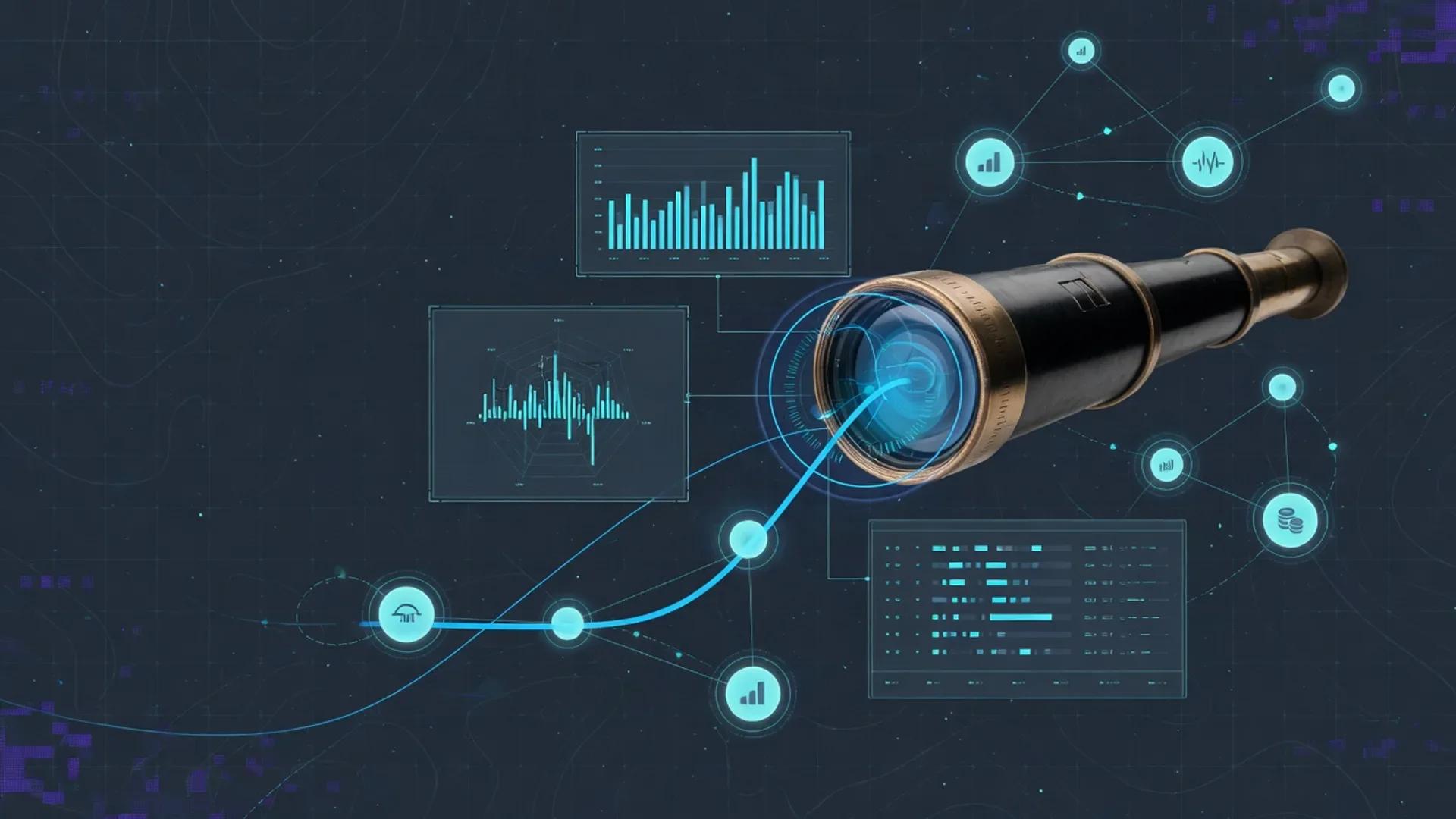
Competitive Intelligence AI Workflow
A six-step competitive intelligence AI workflow that turns primary sources into decision-ready briefs with Perplexity, Claude, ChatGPT, Notion AI, and Midjourney — built to resist prompt injection, hallucination, and the temptation to invent market wins.
Related
More reviews

Editorial review
Cursor Review (July 2026): Documentation-Based Analysis of the AI Coding Agent
A documentation-based July 2026 review of Cursor by aiuncovers: pricing, models, Privacy Mode, pros and cons, vs GitHub Copilot, and who should buy it.
Score 86/100
Zapier AI Review (July 2026): Connectors, Pricing, Agents, and Verdict
Hands-off, source-backed Zapier AI review for July 2026. Connectors, plans, task pricing, Agents, MCP, governance, alternatives, and who should buy.
Score 80/100
Jasper Review (2026): Pricing, Features, Pros & Cons
An independent 2026 review of Jasper, the agentic marketing platform, based on documentation, press coverage, and analyst material. Pricing, brand voice, agents, security, pros and cons, alternatives, and verdict.
Next step
Explore Perplexity
Open the full product profile, or browse every structured review.