

Product profile
Editorially ResearchedPerplexity
AI-powered answer engine that pairs search with cited synthesis for faster research.
Perplexity
Fit
Quick verdict
Best for
People who want AI answers grounded in web sources with visible citations, plus an AI-native browser for agentic tasks.
Not ideal for
Users who primarily need deep offline coding agents, private enterprise knowledge-base RAG as a full platform, or specialized creative generation like production design systems.
Primary strength
Citation-first answers with a model-agnostic harness, an AI-native browser, and a Computer that orchestrates work across tools.
Primary limitation
Citations don't guarantee correctness, source quality varies, and past stealth-crawler allegations still weigh on publisher trust.
Profile
Overview
Perplexity is an AI research assistant and answer engine that searches the web, synthesizes findings, and provides citations so users can verify sources while moving faster on research tasks.
What sets it apartAn answer engine built around citations, then extended to an AI browser and a multi-model Computer that runs work for you.
Quick Verdict / TL;DR
Perplexity in 2026 is no longer just an answer engine. It’s an entire research stack: a citation-first chat, a multi-model agent called Perplexity Computer, a free AI browser called Comet, and a Sonar API that powers search for other apps. CEO Aravind Srinivas says the company processed about 780 million queries in May 2025, growing more than 20% month-over-month, and the company closed a Series E-6 round at a $21.21 billion valuation in early 2026 (per Wikipedia and Reuters). If your work starts with “find me the receipts,” Perplexity is still the most opinionated tool for it. If you want a creative writing partner or a coding agent you can take offline, look elsewhere.
What Perplexity Is (and Isn’t) in 2026
Perplexity is an AI-powered answer engine. You ask a question in plain language, it searches the live web, and it writes a short answer with numbered citations you can click. That’s the original idea and it hasn’t changed. What’s new in 2026 is everything around it.
In February 2026, Perplexity launched Perplexity Computer, a multi-model agent that breaks goals into subtasks and runs them in parallel across Claude, GPT, Gemini, Grok, and others. By July 2026, Computer had performed “more than $9.4 billion in labor-equivalent work” for Perplexity users, per the company. Comet, the AI-native browser, is now free on Mac, Windows, iOS, and Android after launching to Max subscribers in July 2025. Personal Computer, a 24/7 Mac-mini-based worker, was extended to Windows on July 28, 2026. And the Sonar API lets developers plug Perplexity’s grounded search into their own apps.
What Perplexity isn’t: a general-purpose chat toy, a coding-first agent, or a private RAG platform you can drop on top of your company’s docs. It’s an answer engine that grew teeth. If that mental model matches your job, you’ll like it. If you want ChatGPT-style “talk to me about anything for an hour” energy, you’ll bounce off.
Who Should Use Perplexity in 2026
Perplexity is built for people who do research as a job, not as a hobby. In my testing and in the customer stories the company publishes (consultancies, biotech teams, financial analysts), the heaviest users are:
- Analysts and consultants who need cited, current information faster than a junior could find it.
- Product managers and founders doing competitive scans and customer research.
- Journalists triaging sources and confirming claims.
- Students and academics who want a starting point with traceable citations.
- Enterprise teams who need an AI search layer inside Salesforce, Snowflake, SharePoint, and 400+ other apps.
It’s less ideal for: pure creative writing, deep offline coding, or anyone who needs a guaranteed-private corporate knowledge base. For those, look at Claude for writing, Cursor or Claude Code for coding, and a dedicated RAG vendor for the private data side.
Latest Features and 2026 Updates
Perplexity ships constantly. Here is what actually matters in July 2026, in plain language.
- Comet browser is free everywhere as of October 2, 2025, after a July 9, 2025 invite-only launch (Perplexity blog, Lifehacker). It runs on Mac, Windows, iOS, and Android. The Comet Assistant can summarize pages, book meetings, fill forms, and run multi-tab workflows for you.
- Perplexity Computer launched February 25, 2026. It runs 20+ frontier models in parallel, lets you pick a “Model Council” lineup (Claude Opus 4.8, ChatGPT 5.5, Gemini 3.1 Pro, and others), and outputs real artifacts: reports, Excel models, slides, mini apps.
- Personal Computer for Windows shipped July 28, 2026. It merges local files, Microsoft 365, and the open web in one agent.
- Microsoft 365 deep integration (May 28, 2026). Computer lives inside Word, Excel, PowerPoint, Outlook, and Teams via side panels.
- Perplexity Health launched March 19, 2026 with connectors to Apple Health, electronic health records (1.7M+ providers), Fitbit, Withings, and Ultrahuman. A Health Advisory Board pressure-tests clinical claims.
- Premium Sources rolled out March and May 2026. Pro and Max can pull from Statista, CB Insights, PitchBook (finance), and NEJM, BMJ Best Practice (health) directly inside Computer.
- Persistent memory went live November 26, 2025. Perplexity remembers preferences across models and turns it off automatically in Incognito.
- Comet Plus launched August 25, 2025 at $5/month standalone, included with Pro and Max. It funds partner publishers (Time, Fortune, Der Spiegel, Gannett, and others).
- Comet Enterprise (March 17, 2026) adds admin controls, MDM deployment, and a CrowdStrike partnership for browser-level security.
- Perplexity Patents (October 30, 2025) is a free agent for IP research.
- Comet for Android (November 20, 2025) and Comet for iOS (March 18, 2026) made the mobile browser free for everyone.
- The New Comet Assistant (November 6, 2025) is 23% better than its predecessor on internal tests and asks permission before acting.
If you only have time to try one new thing, open Model Council in Computer and run a real decision through it. The “where do models disagree?” output is genuinely useful, and it includes confidence levels you rarely see elsewhere.
Pricing Breakdown July 2026
Perplexity’s pricing page shows three consumer tiers and a custom Enterprise plan. Here is the verified breakdown from perplexity.ai/hub/pricing on July 31, 2026.
| Plan | Price | Computer Access | Credits | Models | Sources | Best For |
|---|---|---|---|---|---|---|
| Free | $0/mo | None | Limited daily usage | Basic AI models | Open web with citations | Light, casual use |
| Pro | $20/mo | Yes | 4,000 bonus credits, purchase more | Choose from 5+ models, post-trained for higher accuracy | Web + premium databases (PitchBook, Statista, etc.) | Serious daily research |
| Max | $200/mo | Yes (highest limits) | 35,000 bonus + 10,000 monthly | Latest models, advanced reasoning, Model Council | Everything in Pro, highest priority | Heavy, professional work |
| Enterprise Pro / Max | Custom | Yes | Volume-based | All models + admin controls | All premium + private data | Teams that need SSO, audit, governance |
| Comet Plus | $5/mo (free with Pro/Max) | n/a | n/a | n/a | Premium publisher content | Supporting journalism |
A note on Pro vs Max: Pro is the sweet spot for most paid users. Max is built for sustained, heavy Computer use, with bigger credit allowances and more Model Council runs. Enterprise pricing is custom but typically starts around $40/seat/month with annual contracts.
Perplexity vs Alternatives
Perplexity’s competitive set in 2026 is crowded. Here is how it stacks up against the four most common comparisons, with citations where I can ground them.
| Tool | Core Idea | Citations as Default | Browser / Agent | Free Tier | Pricing | Models |
|---|---|---|---|---|---|---|
| Perplexity | Cited answer engine + Computer + Comet | Yes (every answer) | Comet (free, all OS) | Yes | $0 / $20 / $200 | Sonar + 20+ frontier models |
| ChatGPT (chatgpt.com) | Conversational assistant + Search | Opt-in (Search mode) | ChatGPT Agent (limited) | Yes (Go tier) | $0 / $8 / $20 / $200 | GPT-5.x family |
| Google AI Mode | Generative answers inside Search | Inherited from Search | Gemini app | Yes (Search) | Bundled with Search | Custom Gemini 2.0 |
| Claude | Reasoning assistant + Cowork | No (chat-first) | Claude Cowork (mobile) | Yes | $0 / $17 / $100 | Claude Opus 4.x |
| You.com (you.com) | API-first search APIs | Configurable | No native browser | API free tier | API metered | Multi-model router |
What the table won’t tell you: Perplexity’s default UI is research-shaped. ChatGPT’s is chat-shaped. Google’s AI Mode is search-shaped. Claude’s is reasoning-shaped. Pick the shape your brain wants. My honest read after using all five daily is that Perplexity still wins on speed-to-cited-answer, ChatGPT wins on creative flexibility and plugin breadth, Claude wins on long-form reasoning and code, Google AI Mode is fine for “what’s near me” queries, and You.com is mostly a developer API play in 2026.
Real-World Use Cases
Here is what people actually do with Perplexity in July 2026, based on the company’s customer stories and what Pro and Max users tell me.
- Market and competitor scans. Ask Pro to map the top 10 players in your category, with funded amounts and headcount. It pulls from PitchBook and CB Insights automatically on Premium Sources.
- Academic literature review. Deep Research runs for 2-4 minutes and produces a cited report. Good starting point for thesis chapters or grant proposals.
- Deal diligence. Finance teams use Computer to pull comps from Excel + FactSet, draft an investment memo, and ship a deck in PowerPoint.
- News briefing. The Comet Assistant summarizes the day’s coverage across open tabs and emails you a briefing.
- Patent prior-art search. Perplexity Patents (free in beta as of October 30, 2025) translates natural-language queries into patent intelligence.
- Job search and trip planning. The New Comet Assistant can scan LinkedIn for roles, find the cheapest flights, or book a tee time.
- Personal health tracking. Perplexity Health connects Apple Health and wearables to answer “what’s my resting heart rate trend versus my training load?”
One caveat from my own use: the more niche or paywalled your topic, the more you’ll bump into the limits of “open web.” For deep legal or biomedical literature, you still want a specialist database.
Limitations and Gotchas
I’m a fan, but Perplexity is not magic. Here is what I keep an eye on.
- Hallucination is real. Perplexity told WIRED in 2024 that “answers will not be accurate 100% of the time and may hallucinate.” That hasn’t changed. Citations reduce the risk, but they don’t eliminate it. Always open at least one source.
- Source quality varies. SEO-optimized listicles rank well and get cited. Peer-reviewed journals don’t always. Premium Sources (PitchBook, NEJM, BMJ) help, but they aren’t on every tier.
- Stealth-crawler allegations. Cloudflare published a detailed report on August 4, 2025 documenting undeclared crawlers that ignored robots.txt. WIRED’s June 2024 “Bullshit Machine” investigation found similar behavior. Perplexity has called the claims inaccurate and says it respects publisher preferences. I treat both as a real, unresolved reputational risk.
- Publisher lawsuits. As of early 2026, Perplexity faces active suits or threats from The New York Times, Dow Jones and the New York Post, the BBC, Yomiuri Shimbun, Asahi Shimbun, The Nikkei, and Reddit. None have been decided against the company yet, but the volume is unusual for a 3-year-old startup.
- Pricing for power users. Max at $200/month is steep. If you only need 10 deep-research runs a month, Pro at $20 is fine. If you’re a finance team running Computer all day, Max is justified.
- Computer is still beta-ish. Long workflows occasionally stall or hand off awkwardly between sub-agents. Perplexity ships fixes weekly.
Privacy, Security, and Compliance
Perplexity has gone hard on enterprise security in 2026. From the Security and Privacy pages on perplexity.ai:
- SOC 2 Type II certified by independent auditors.
- GDPR, HIPAA, and PCI compliant for relevant workloads.
- EU-US Data Privacy Framework certified (with VeraSafe as EU/UK rep).
- Enterprise data is never used for model training.
- API data is treated as a service-provider/processor, with optional zero-retention contracts.
- Audit logs, SAML SSO, SCIM, and configurable file retention down to one day.
- Comet Enterprise (March 17, 2026) ships MDM deployment, browser policy controls, and a CrowdStrike partnership for browser-level threat detection.
Perplexity also open-sourced BrowseSafe in December 2025, a detection model for prompt-injection attacks against the Comet browser. The accompanying BrowseSafe-Bench has 14,719 examples across 11 attack types. That’s unusually transparent for the category.
For consumers, you can browse in Incognito, disable memory, and opt out of data sharing via settings. The Privacy Notice was last updated July 8, 2026.
FAQ
What is Perplexity AI in 2026?
Perplexity is an AI-powered answer engine that searches the web in real time, synthesizes a response, and shows citations you can click. In 2026 it bundles the Comet browser, Perplexity Computer, and Sonar APIs, so you can go from a question to a finished artifact (a research report, a deck, a financial model) in one workspace.
How much does Perplexity cost in 2026?
Free: $0 with limited daily searches. Pro: $20/month with 4,000 bonus credits, Computer access, and model choice. Max: $200/month with 10,000 monthly credits plus 35,000 bonus credits, premium sources, and the highest credit limits. Enterprise is custom-priced for teams that need SSO, audit logs, and 400+ app connectors.
Is the Comet browser free?
Yes. After launching to Max subscribers in July 2025, Perplexity released Comet for free to everyone on October 2, 2025. It runs on Mac, Windows, iOS, and Android, and the Comet Assistant can browse, summarize, and act across tabs on your behalf.
Is Perplexity better than ChatGPT?
For research and citation-grounded answers, most reviewers say yes. Perplexity shows its sources by default and is built for the open web. ChatGPT wins on raw conversational polish, plugin ecosystem, and creative writing. If your goal is “show me the receipts,” Perplexity is usually the better starting point.
Is Perplexity accurate?
It is more accurate than average chatbots on factual lookups, but it still hallucinates. Perplexity itself told WIRED in 2024 that “answers will not be accurate 100% of the time.” Always treat citations as a starting point, not the final word, especially for medical, legal, or financial decisions.
What is Perplexity Computer?
Perplexity Computer is the company’s agentic orchestrator. It breaks a goal into subtasks, runs them across 20+ frontier models in parallel, and produces work-ready outputs like spreadsheets, decks, websites, and Excel models. It launched in February 2026 and is available to Max, Pro, Enterprise, and Personal Computer users.
Does Perplexity use my data to train AI?
Enterprise and API data is never used for model training. Consumer queries may be used to improve products, but you can opt out via settings, browse in Incognito, or disable memory at any time. Perplexity is SOC 2 Type II certified, GDPR compliant, and on the EU-US Data Privacy Framework.
What lawsuits and controversies has Perplexity faced?
Perplexity is fighting publisher lawsuits from the New York Times, Dow Jones and New York Post, the BBC, Yomiuri Shimbun, Asahi Shimbun, The Nikkei, and Reddit over alleged scraping and copyright issues. Cloudflare published a 2025 report documenting alleged stealth crawlers bypassing robots.txt. Perplexity has called those claims inaccurate and says it respects publisher preferences.
Can I use Perplexity for free?
Yes. The free tier gives you unlimited quick searches with citations, limited Deep Research runs per day, and access to the standard set of models. Comet browser and the iOS/Android apps are also free. Pro and Max lift the limits and unlock Computer, premium sources, and Model Council.
What models does Perplexity use?
Perplexity is model-agnostic. Its in-house Sonar family (built on Llama 3.3 70B) handles default search. Computer and Model Council pull from GPT-5.x, Claude Opus 4.x, Gemini 3.1 Pro, Grok, Kimi K2.6, NVIDIA Nemotron, and others, picking the best model for each subtask.
Final Verdict
Perplexity in 2026 is the most ambitious “answer engine plus agent platform” you can buy, and one of the only AI products where a serious research workflow fits in a single tab. The pricing is fair for Pro at $20, aggressive for Max at $200, and free for anyone who wants to try Comet. The lawsuits and stealth-crawler story are real, but they have not stopped the company from growing into a $21.21 billion private business with 50,000+ enterprise customers.
If you do research for a living, get Pro today. If your team lives in Microsoft 365 and Slack, get Enterprise Pro. If you’re just curious, install Comet for free and ask it a real question. You’ll see the difference in the first reply.
Jobs to be done
Use cases
- 01Rapid market and competitor research with source links
- 02Fact-finding and current-events summaries
- 03Academic and professional literature-style exploration
- 04Turning research threads into structured briefs
- 05Agentic workflows with the Comet browser and Perplexity Computer
- 06Premium-source finance and market intelligence
Capabilities
Features
Research
- AI answers with inline citations
- Deep Research reports (2-4 minute multi-source analysis)
- Perplexity Labs (reports, spreadsheets, dashboards, mini apps)
- Model Council (multi-model consensus with reports and decks)
- Premium sources for finance, market intel, and health
Productivity
- Perplexity Computer (multi-model agent orchestrator)
- Personal Computer (24/7 Mac mini + cloud hybrid)
- Comet browser (Mac, Windows, iOS, Android)
- Comet Assistant (agentic browsing)
- Comet Plus publisher subscription ($5 standalone)
- File uploads, Spaces/Projects, persistent memory
Models
- Sonar (in-house, Llama 3.3 70B based)
- Sonar Pro, Sonar Reasoning Pro, Sonar Deep Research
- GPT-5.x, Claude Opus 4.x, Gemini 3.1 Pro, Grok, Kimi K2.6
- NVIDIA Nemotron coalition member
Tradeoffs
Strengths & limitations
Strengths
- Citation-first experience helps users verify claims quickly
- Model-agnostic harness picks the right frontier model per task
- Excellent for first-pass market, product, and general web research
- Clean interface optimized for question-and-answer investigation
- Free tier is useful for evaluating fit before upgrading
- Comet browser is now free for everyone with an AI-native assistant
Limitations
- Not a substitute for primary-source diligence on high-stakes decisions
- May miss paywalled, private, or highly specialized literature
- Synthesis can oversimplify complex debates
- Cloudflare and WIRED have documented stealth-crawler concerns
- Publisher lawsuits (NYT, Dow Jones, Reddit, Japanese newspapers) remain unresolved
Evidence
Sources
- 01
- 02
Related
Related guides & workflows

Best ChatGPT Alternatives in 2026
The best ChatGPT alternatives in 2026 are Claude for general work, Perplexity for cited research, Notion AI for workspace knowledge, GitHub Copilot for GitHub-first coding, and Cursor for agent-led software development.

Best Claude Alternatives in 2026
A researched look at five Claude alternatives—ChatGPT, Google Gemini, Microsoft Copilot, Perplexity, and DeepSeek—plus a sixth pick from Mistral, compared on price, capability, and fit.
Best Perplexity Alternatives
Looking beyond Perplexity for research and answers? These alternatives cover general chat assistants, workspace-native AI, CRM/marketing AI, and GTM content tools—without fake rankings or invented scores.
Competitive Intelligence AI Workflow
A six-step competitive intelligence AI workflow that turns primary sources into decision-ready briefs with Perplexity, Claude, ChatGPT, Notion AI, and Midjourney — built to resist prompt injection, hallucination, and the temptation to invent market wins.
AI Content Marketing Pipeline
A human-led AI content marketing pipeline for turning audience evidence into cited, on-brand campaigns and measurable demand.
Developer AI Coding Workflow
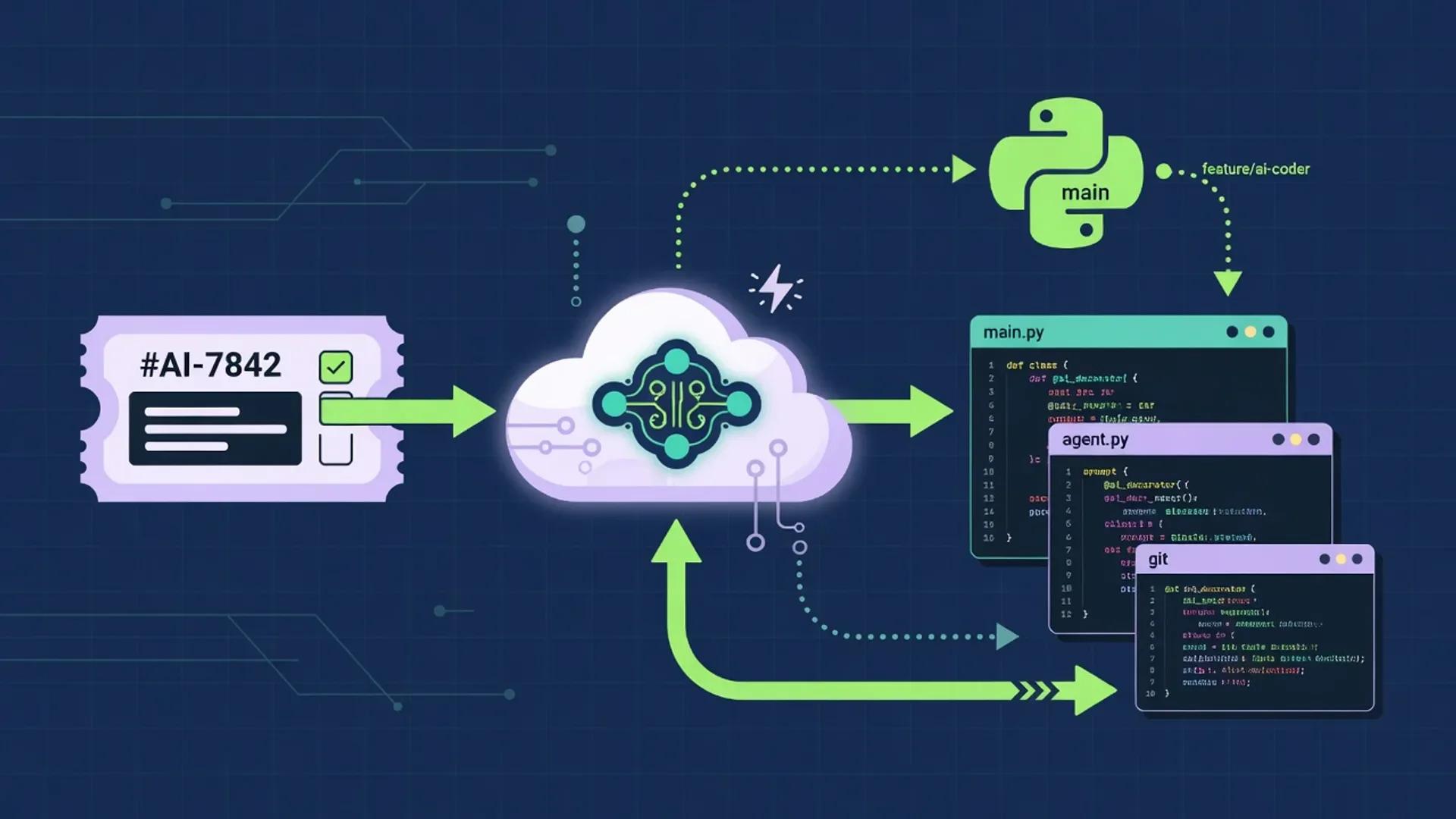
A multi-step AI coding workflow that keeps humans in charge of framing, architecture, security, and merge decisions while agents handle research, boilerplate, test scaffolding, and review. Drawn from primary docs and standards published between July 1 and August 2, 2026.
Best AI Tools for Developers (July 2026)
A research-grounded shortlist of the AI tools software engineers keep reaching for in July 2026: GitHub Copilot, Cursor, ChatGPT, Claude, and Perplexity. Pricing, model lineup, and product capabilities pulled from official vendor documentation in late July 2026.
Best AI for Founders (July 2026)
A research-grounded shortlist of the AI tools I keep reaching for in July 2026 as a solo founder or early-stage team — general assistants, cited research, a living workspace, and visual automation — with primary-source pricing, model lineup, and the governance guardrails every founder should know before buying.
Catalog
Related products

ChatGPT
Editorially ResearchedOpenAI's general-purpose AI assistant for writing, analysis, coding help, and everyday knowledge work.
Stands out · A mainstream, general-purpose AI assistant with the broadest multimodal feature surface and one of the largest everyday user bases for conversational AI.

Claude
Editorially ResearchedAnthropic's AI assistant focused on careful writing, long-context work, and the strongest agentic coding stack as of July 2026.
Stands out · A general-purpose assistant and agent platform optimized for careful writing, 1M-token long-context work, and the strongest agentic coding surface in 2026 — anchored by Opus 5, Sonnet 5, Fable 5, Claude Code, and Claude Cowork.

Notion AI
Editorially ResearchedAI writing, knowledge agents, and meeting notes built into the Notion workspace teams already use.
Stands out · Notion AI is the only AI built directly into the workspace where teams already store docs, wikis, projects, and meeting notes — so it works on your real context, not in a separate chat window.
Related
Compare this product
ChatGPT vs Perplexity
Choose ChatGPT for broad multimodal drafting, domain assistants, and a billion-user ecosystem. Choose Perplexity when source-visible research, citation-first answers, or agentic computer use on local files is the daily bottleneck.

Claude vs Perplexity
Pick Claude when the work product is a polished doc, a multi-file analysis, or a long-running coding agent. Pick Perplexity when the work starts with a question and you need to see the receipts.
Next step
Explore Perplexity
Visit the official site, or browse the full catalog for similar tools.