
Alternatives guide
Best Claude Alternatives in 2026
A researched look at five Claude alternatives—ChatGPT, Google Gemini, Microsoft Copilot, Perplexity, and DeepSeek—plus a sixth pick from Mistral, compared on price, capability, and fit.

Best Claude Alternatives in 2026
Context
Why people look for alternatives
People look beyond Claude for cheaper frontier-model APIs, citation-first research, native multimodal tools, IDE-native coding, or AI already wired into the workspace apps they use every day.
Options
Alternatives

Citation-first answer engine that routes between top frontier models and adds visible sources on every reply.
Best for · Analysts, founders, and researchers whose bottleneck is web investigation, not long-form drafting.
Shortcuts
Quick picks
Best overall
Best lower cost
Best free
Best for teams
Best specialist
Questions
FAQ
01
What is the best alternative to Claude AI in 2026?
01
What is the best alternative to Claude AI in 2026?
For most people, ChatGPT (GPT-5.6) is the closest all-purpose replacement. For web research, pick Perplexity. For cheap API volume, pick DeepSeek. For Google-heavy workflows, pick Gemini.
02
Is ChatGPT better than Claude?
02
Is ChatGPT better than Claude?
Not universally. GPT-5.6 Sol leads Claude Fable 5 by 13.1 points on Agents' Last Exam at medium reasoning and is cheaper per token, while Claude Opus 5 leads the Artificial Analysis Intelligence Index at max reasoning. Pick by which benchmark matches your workload.
03
Which is cheaper, Claude or ChatGPT?
03
Which is cheaper, Claude or ChatGPT?
Claude Sonnet 5 is $3 per million input tokens and $15 per million output tokens. GPT-5.6 Luna is $1 input and $6 output. Claude Opus 5 and GPT-5.6 Sol both sit at the top tier around $5 input and $25–30 output.
04
Is there a free Claude alternative?
04
Is there a free Claude alternative?
Yes. ChatGPT, Gemini, Microsoft Copilot, Perplexity, and Le Chat all offer usable free tiers in 2026.
05
Can Microsoft Copilot replace Claude for work?
05
Can Microsoft Copilot replace Claude for work?
For Microsoft 365 users, yes—Copilot reads your email, files, meetings, and chats through Work IQ, so context-heavy tasks stay inside the tools you already use.
06
Is DeepSeek as good as Claude?
06
Is DeepSeek as good as Claude?
On price-per-task, DeepSeek V4 Pro beats every Anthropic model in Artificial Analysis cost rankings. On raw intelligence, Claude Opus 5 still leads the index at 61 versus DeepSeek V4 Pro at 44.
Deep dive
Full guide
Best Claude Alternatives in 2026
Claude alternatives now span the full spectrum: frontier OpenAI and Google models that match or beat Anthropic on raw intelligence, cheaper open-weight Chinese models priced an order of magnitude lower, a citation-first research engine, and assistants that already live inside Microsoft and Google workspaces.
This page maps the current field of Claude alternatives in 2026. It is editorially researched, not hands-on tested, and no vendor paid to appear here. Prices and benchmarks below were drawn from vendor docs and the Artificial Analysis intelligence index published in July 2026.
“On Agents’ Last Exam, GPT-5.6 Sol sets a new high of 53.6, eclipsing Claude Fable 5 (adaptive reasoning) by 13.1 points.” — OpenAI, “GPT-5.6: Frontier intelligence that scales with your ambition,” July 9, 2026
How I picked the five
I started from the strongest general-purpose Claude substitutes in 2026, then trimmed to five. The picks:
- ChatGPT (GPT-5.6) — the broadest Claude replacement
- Google Gemini (3.5 / 3.6 family) — the strongest Google-native option
- Microsoft Copilot — the strongest Microsoft 365 replacement
- Perplexity — the strongest research-with-sources option
- DeepSeek V4 — the cheapest capable Claude substitute
I also keep Mistral Le Chat as a sixth for teams that need European data residency or open-weight self-hosting.
Quick comparison: Claude alternatives at a glance
| Product | Cheapest paid plan | Flagship API price (in / out per 1M tokens) | Best at | Notable limit |
|---|---|---|---|---|
| Claude (Anthropic) | Pro $17/mo | Opus 5: $5 / $25; Sonnet 5: $3 / $15 | Long-form drafting, agentic coding | Closed weights, no free API |
| ChatGPT (GPT-5.6) | Plus $20/mo | Sol: $5 / $30; Terra: $2.50 / $15; Luna: $1 / $6 | General assistant, plugin ecosystem, multi-modal | Rate limits on free and Plus tiers |
| Google Gemini | Free, AI Pro $19.99/mo | Flash tiers in API; Pro via Vertex | Workspace-native AI, multimodal, free tier | Most capable model gated to paid plans |
| Microsoft Copilot | Copilot free, Pro $20/mo | Billed per tenant; M365 Copilot $30/user/mo | Microsoft 365, Outlook, Teams context | Locked to Microsoft tenants |
| Perplexity | Pro $20/mo, Max $200/mo | API per-call | Cited web research, multi-model routing | Less suited for very long creative drafts |
| DeepSeek V4 | API usage-based | V4 Pro: $0.435 / $0.87; V4 Flash: $0.14 / $0.28 | Cheap API volume, open ecosystem | Higher latency, China-hosted origin |
| Mistral Le Chat | Pro $14.99/mo | Medium 3.5: $1.50 / $7.50 | Open-weight self-hosting, EU residency | Smaller consumer footprint |
Sources: Claude pricing, OpenAI business pricing, Mistral pricing, Perplexity pricing, DeepSeek API pricing, and Microsoft 365 Copilot pages as of late July 2026.
ChatGPT (GPT-5.6)
ChatGPT is the most common Claude replacement in 2026 because it now offers three model tiers inside a single subscription. GPT-5.6 Sol is the flagship, Terra is a balanced workhorse, and Luna is the cheapest. All three are available in ChatGPT Plus, Pro, Business, and Enterprise plans.
On July 9, 2026, OpenAI launched GPT-5.6 for general availability, with a new “ultra” setting that coordinates four agents in parallel on the hardest tasks. On coding benchmarks, GPT-5.6 Sol hits 80 on the Artificial Analysis Coding Agent Index v1.1, compared with 77.2 for Claude Fable 5 and 72.5 for Claude Opus 4.8, while using less than half the output tokens.
ChatGPT also ships products Claude does not have. ChatGPT Health launched July 23, 2026 (source). ChatGPT for Academic Researchers launched July 29, 2026 (source). Voice, image generation, custom GPTs, and a plugin store all stay inside the same assistant.
Pick ChatGPT if: you want one default assistant across writing, analysis, coding, and image work, and you value the largest ecosystem of plugins.
How much does ChatGPT cost compared to Claude?
GPT-5.6 Luna is priced at $1 per million input tokens and $6 per million output tokens, which is roughly three to four times cheaper than Claude Sonnet 5 at standard pricing. GPT-5.6 Sol sits at $5 input / $30 output, slightly above Claude Opus 5’s $5 / $25.
Google Gemini
Google’s Gemini 3.5 family arrived in May 2026, and the 3.6 updates followed through July. The flagship Flash model ships to billions of people through the Gemini app, AI Mode in Google Search, and Android. A Pro tier is rolling out via Workspace and Vertex.
In Google’s launch post, Gemini 3.5 Flash hits 76.2% on Terminal-Bench 2.1, 1656 Elo on GDPval-AA, and 83.6% on MCP Atlas, beating Gemini 3.1 Pro on all three. Output speed is roughly four times faster than other frontier models per Google’s own benchmark. On Artificial Analysis, Gemini 3.5 Flash scores 50 on the intelligence index, while the larger Pro Preview sits at 46.
The Gemini app now bundles Gemini Spark, a personal agent that runs 24/7 and can take actions on your behalf under supervision. Google Antigravity 2.0, launched May 2026, is the agent-first IDE for developers who prefer Gemini inside their editor.
Pick Gemini if: your day already runs on Google Docs, Sheets, Gmail, and Android, and you want AI that lives in those surfaces without copy-paste.
Is Gemini better than Claude for coding?
On Terminal-Bench 2.1, GPT-5.6 Sol hits 88.8%, Claude Fable 5 hits 83.1%, and Gemini 3.5 Flash hits 76.2%. For pure agentic coding Claude still leads on the hardest benchmarks, but Gemini Flash wins on cost-per-task and speed.
Microsoft Copilot
Microsoft Copilot is the strongest Claude replacement for people who live inside Microsoft 365. The 2026 version reads your email, files, meetings, and chats through a layer called Work IQ, then grounds its answers in that context. Agents, Notebooks, and a Cowork mode for handing off complex tasks are all built in.
In February 2026, Microsoft launched Copilot Tasks, pushing the assistant from answering questions to executing them. Copilot Health moved into preview on May 29, 2026 (source). On July 27, 2026, Microsoft shipped its first cybersecurity model and a new agentic cybersecurity system, per TechCrunch.
The catch: most of this is gated to Microsoft 365 tenants. Free Copilot Chat exists, but the deep Workspace context lives behind Microsoft 365 Copilot licenses.
Pick Microsoft Copilot if: your team already pays for Microsoft 365, and the assistant needs to know what’s in Outlook, Teams, OneDrive, and SharePoint.
Perplexity
Perplexity is the Claude alternative I keep coming back to for research. Every answer carries inline citations, and the engine routes between top frontier models (ChatGPT, Gemini, Claude, NVIDIA Nemotron) per query. You can also lock it to a preferred model.
The Pro plan is $20 per month, Max is $200 per month (source). Pro and Max unlock premium data sources like PitchBook, Statista, and S&P Capital IQ, which is why I see finance and consulting teams use Perplexity as a daily driver. The Comet browser puts the same engine directly in your tab bar.
Pick Perplexity if: your bottleneck is web investigation with visible sources, and you do not want to fight hallucination in long drafts.
Is Perplexity better than Claude for research?
Yes, if “research” means web investigation with citations. Claude wins on long-form synthesis, but Perplexity shows the source for every claim and lets you drill into follow-ups inside a single Space.
DeepSeek
DeepSeek is the cheapest serious Claude alternative in 2026. The V4 line went general availability on July 24, 2026 (source), with V4 Pro at $0.435 per million input tokens and $0.87 per million output tokens. V4 Flash is even cheaper at $0.14 / $0.28. Both ship with a 1M-token context window.
On Artificial Analysis, DeepSeek V4 Pro scores 44 on the intelligence index and V4 Flash scores 40, well below Claude Opus 5 at 61 but at a fraction of the cost. DeepSeek raised $7.4B in June 2026 at a $50B+ valuation, per multiple reports. Anthropic CEO Dario Amodei responded on July 27, 2026, saying the company has never advocated banning open-weight models but supports mandatory safety testing.
Pick DeepSeek if: you are running heavy API volume on a tight budget, and you are okay with a Chinese-origin provider.
How much cheaper is DeepSeek than Claude?
DeepSeek V4 Pro is roughly 11× cheaper than Claude Opus 5 on input tokens ($0.435 vs $5) and about 29× cheaper on output tokens ($0.87 vs $25). V4 Flash is roughly 36× cheaper on input and 89× cheaper on output.
Mistral Le Chat (honorable mention)
Mistral rounds out the list as the open-weight-friendly, EU-hosted option. Mistral Medium 3.5 launched May 22, 2026 as a 128B dense model with a 256k context window and SWE-Bench Verified score of 77.6%. API pricing is $1.50 per million input tokens and $7.50 per million output tokens. Le Chat Pro is $14.99 per month, with Team at $24.99 per user per month.
Mistral’s edge is openness. Vibe for Code and Mistral Studio ship with first-class MCP connectors and remote coding agents that run in cloud sandboxes. Mistral raised 1.7 billion euros in September 2025 (source) and continues to ship open-weight models under a modified MIT license.
Pick Mistral if: you need EU data residency, on-prem self-hosting, or open-weight models you can audit.
How to choose between them
I use the same checklist I would give a friend:
- Run a real prompt from your last two weeks of work on each tool.
- Spend three days with the free tier of the one you like best.
- Check the privacy and retention settings on the plan you would actually buy.
- Decide whether you need citations visible (Perplexity, Gemini with Search) or long-form synthesis (Claude, ChatGPT).
- Decide whether coding happens mostly in chat or in an IDE (Cursor, Antigravity, Windsurf).
- Compare real costs at your expected monthly token volume.
If you mostly write and analyze, ChatGPT Plus or Gemini AI Pro will cover 80% of what Claude does at the same or lower price. If your work is research, Perplexity Pro earns its $20 in the first week. If you are shipping code at scale, DeepSeek V4’s API is so cheap it changes the unit economics. If you are inside Microsoft 365, Copilot is the path of least resistance. If you need EU residency or open weights, Mistral is the only credible option.
Trial on real work, not on synthetic demos. Standardize after a real week.
What about Cursor, GitHub Copilot, and Notion AI?
The previous version of this page also listed IDE-native tools (Cursor, GitHub Copilot) and workspace-native AI (Notion AI). Those are great complements to Claude, not direct chat replacements. Cursor and GitHub Copilot win for day-to-day coding velocity inside your editor, and Notion AI wins when your company’s memory already lives in Notion docs and projects. My advice: pick a chat assistant from the five above for thinking and drafting, then add one IDE or workspace tool if that matches how you actually work.
What I would not recommend as a Claude swap
Three things I would skip in 2026: (1) small closed models marketed as “Claude killers” that underperform on the Artificial Analysis index, (2) free browser extensions that route your prompts through unknown servers, and (3) any “Pro” plan that hides which model powers it. Stick to vendors that publish pricing, model names, and a recent system card.
Catalog
Products in this guide


Claude
Editorially ResearchedAnthropic's AI assistant focused on careful writing, long-context work, and the strongest agentic coding stack as of July 2026.
Stands out · A general-purpose assistant and agent platform optimized for careful writing, 1M-token long-context work, and the strongest agentic coding surface in 2026 — anchored by Opus 5, Sonnet 5, Fable 5, Claude Code, and Claude Cowork.

ChatGPT
Editorially ResearchedOpenAI's general-purpose AI assistant for writing, analysis, coding help, and everyday knowledge work.
Stands out · A mainstream, general-purpose AI assistant with the broadest multimodal feature surface and one of the largest everyday user bases for conversational AI.

Perplexity
Editorially ResearchedAI-powered answer engine that pairs search with cited synthesis for faster research.
Stands out · An answer engine built around citations, then extended to an AI browser and a multi-model Computer that runs work for you.
Related
Keep exploring
HubSpot AI vs ChatGPT
Pick HubSpot AI when the work is contacts, deals, tickets, and campaigns inside HubSpot. Pick ChatGPT when the work is open-ended drafting, research, multi-tool reasoning, or anything not tied to a CRM object.

Notion AI vs Claude
Choose Notion AI when your team's knowledge, projects, and meetings already live in Notion and you want an agent that can take action inside that workspace. Choose Claude when you want the best standalone writing, reasoning, and long-document analysis regardless of which wiki you use.
ChatGPT vs Perplexity
Choose ChatGPT for broad multimodal drafting, domain assistants, and a billion-user ecosystem. Choose Perplexity when source-visible research, citation-first answers, or agentic computer use on local files is the daily bottleneck.

Claude vs Perplexity
Pick Claude when the work product is a polished doc, a multi-file analysis, or a long-running coding agent. Pick Perplexity when the work starts with a question and you need to see the receipts.

Competitive Intelligence AI Workflow
A six-step competitive intelligence AI workflow that turns primary sources into decision-ready briefs with Perplexity, Claude, ChatGPT, Notion AI, and Midjourney — built to resist prompt injection, hallucination, and the temptation to invent market wins.
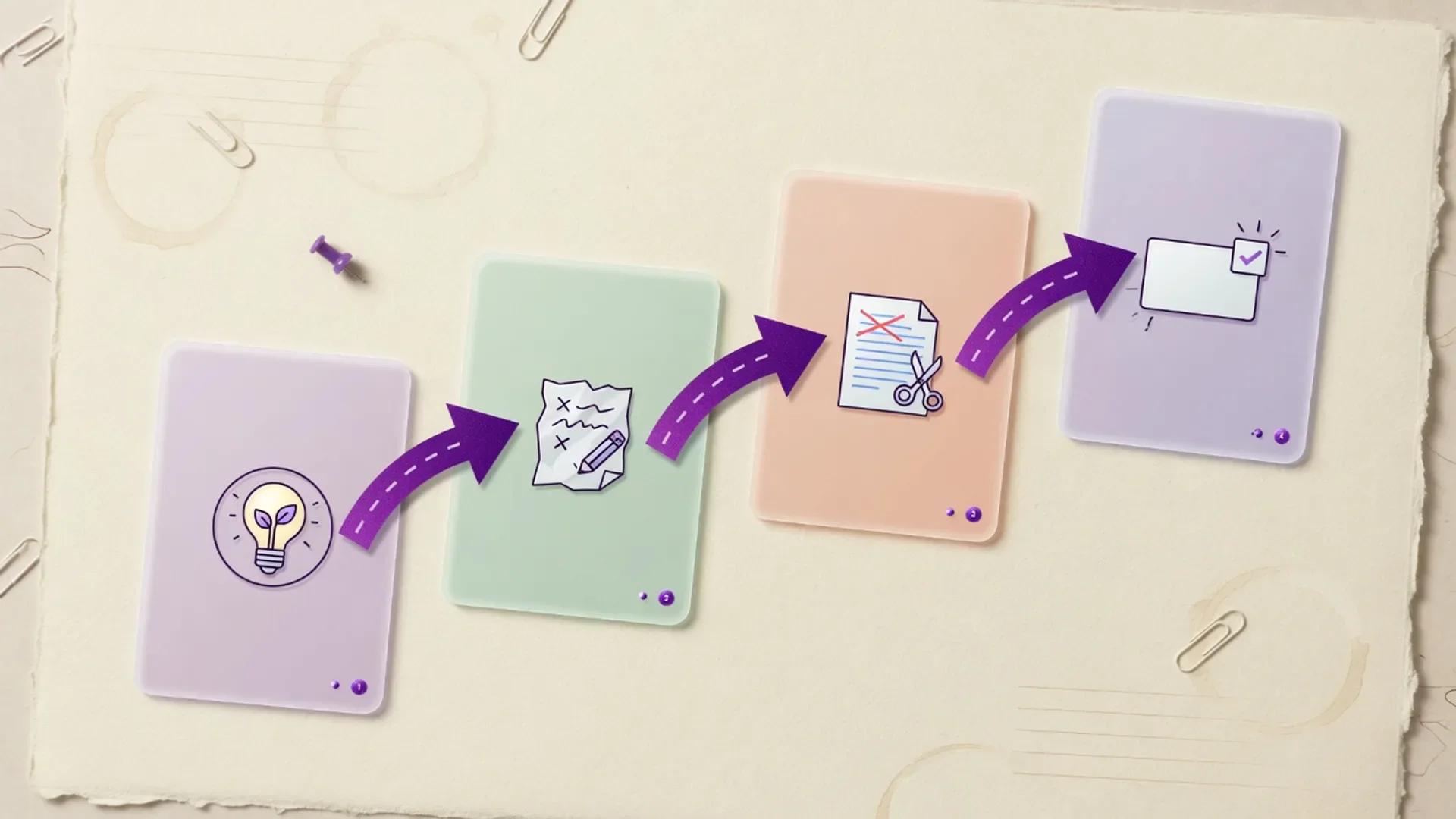
AI Content Marketing Pipeline
A human-led AI content marketing pipeline for turning audience evidence into cited, on-brand campaigns and measurable demand.

Customer Support AI Workflow
A practical, policy-first customer support AI workflow for triaging tickets, drafting replies, grounding agents in your knowledge base, and closing the loop with CRM context and automation, while keeping humans responsible for high-risk resolutions.

Best ChatGPT Alternatives in 2026
The best ChatGPT alternatives in 2026 are Claude for general work, Perplexity for cited research, Notion AI for workspace knowledge, GitHub Copilot for GitHub-first coding, and Cursor for agent-led software development.
Best Perplexity Alternatives
Looking beyond Perplexity for research and answers? These alternatives cover general chat assistants, workspace-native AI, CRM/marketing AI, and GTM content tools—without fake rankings or invented scores.
Next step
Compare options side by side
Open head-to-heads, or review the primary product profile.