
Comparison
GitHub Copilot vs Cursor
Two AI coding tools with very different shapes in 2026. GitHub Copilot is a multi-IDE, GitHub-native assistant with a coding agent and a six-tier plan lineup. Cursor is an AI-first editor and agent platform that just hit a $3B ARR run rate and was acquired by SpaceX for $60B.

GitHub Copilot vs Cursor
Executive verdict
Both are excellent. Copilot is the safe enterprise default in 2026 with the broadest IDE coverage and a coding agent GA'd across github.com. Cursor is the bold choice with deeper multi-file editing, its own frontier models (Composer 2.5, Grok 4.5), and the most aggressive agentic roadmap in the market. Pick by org shape, not leaderboard screenshots.
Best for · Choose GitHub Copilot when you want AI inside every major IDE, GitHub-native admin, and a coding agent that turns issues into pull requests. Choose Cursor when you want the densest AI-native editing experience, a custom frontier coding model, and fleets of cloud agents.
Head to head
Dimensions
Multi-IDE and stack flexibility
Copilot ships across VS Code, Visual Studio, JetBrains, Neovim, Eclipse, Xcode, Raycast, Zed, and SQL Server Management Studio per GitHub's July 2026 plans page. Cursor is a standalone AI-first editor plus web, iOS, and CLI surfaces.
GitHub ecosystem integration
Copilot is built by GitHub and includes a coding agent that opens PRs, code review on github.com, Spaces, and native Actions integration. Cursor integrates with GitHub PRs (e.g. Bugbot) but is editor-first and tool-agnostic.
AI-native editor experience
Cursor is designed from the ground up around chat, multi-file edits, Composer agents, and parallel git worktrees. GitHub's agent mode and edits panel are strong, but the editing surface itself is a plugin.
Codebase understanding and multi-file work
Cursor's repo-wide indexing, Agent mode, and Composer 2.5 are tuned for large, long-horizon refactors. Copilot's coding agent handles assigned issues end-to-end but typically via cloud sandbox + PR rather than a single editor loop.
Individual pricing entry point
Copilot Pro is $10/user/month with $15 AI credits; Cursor Pro is $20/month. Both offer free tiers. Cursor's agent-heavy workloads often push people to Pro+ or Ultra, where pricing is usage-metered.
Enterprise adoption path
Copilot Business ($19) and Enterprise ($39) include pooled credits, SAML SSO, audit logs, and IP indemnity. Cursor Teams ($40/user) adds SAML/OIDC SSO, privacy mode, and SCIM on Enterprise. Either works at scale; the difference is admin UX.
Frontier coding model ownership
Cursor ships its own models: Composer 2 (61.3 Terminal-Bench 2.0, 73.7 SWE-bench Multilingual, March 19, 2026) and Composer 2.5 (May 18, 2026), plus a deep SpaceXAI Grok 4.5 integration. Copilot routes across GPT-5.6, Claude Opus 5, Gemini 3.x, Grok 4.5, and Raptor mini in the picker.
Fit
Audience recommendations
Enterprise engineering orgs on GitHub
Standardize on Copilot Business or Enterprise. You get pooled AI credits, SAML SSO, audit logs, IP indemnity, and a coding agent that already ships into the issues workflow.
Suggested: github copilot
Startup builders and solo developers
Trial Cursor Pro or Pro+ first if you live in multi-file refactors and chat-driven coding. Use Copilot Pro if you want the cheapest $10 seat that works in any IDE you already use.
Suggested: cursor
JetBrains-heavy or mixed-IDE teams
Pick Copilot. Cursor's experience lives inside its own editor; Copilot's lives in yours.
Suggested: github copilot
AI-first engineering orgs chasing agent ROI
Cursor. Cloud agents, parallel worktrees, Composer 2.5, and Bugbot are purpose-built for the agent era, and the company is shipping weekly.
Suggested: cursor
Security and compliance stakeholders
Both support SOC 2, SAML SSO, privacy mode (Cursor), and IP indemnity (Copilot Business+). Read the data retention matrix on each trust portal before enabling org-wide.
Deep dive
Full comparison
What is GitHub Copilot vs Cursor in 2026?
GitHub Copilot is a multi-IDE AI assistant built by GitHub, with inline completions, chat, agent mode, and a cloud coding agent that opens pull requests from issues. Cursor is an AI-first code editor and agent platform from Anysphere, rebuilt on VS Code but redesigned around multi-file chat, parallel agents, and its own frontier coding models (Composer 2, Composer 2.5, and a deep Grok 4.5 integration).
In July 2026, the two tools are no longer just autocomplete plugins. Both ship coding agents that can take a ticket and return a tested pull request. The shape of the product, the shape of the model lineup, and the shape of the company behind it have all changed.
What actually changed in 2026
Three things matter for this comparison.
- Cursor is now a SpaceXAI company. On June 16, 2026, SpaceX announced it was acquiring Anysphere (Cursor’s parent) in an all-stock deal valued at $60 billion, expected to close in Q3 2026 (Reuters, Jun 16, 2026; NYT, Jun 16, 2026). Cursor’s prior funding history includes a $2.3B Series D at a $29.3B valuation in November 2025 and a $900M Series C at $9.9B in June 2025 (CB Insights profile, July 2026).
- Cursor hit a $3B ARR run rate. Bloomberg reported on May 21, 2026 that Cursor had crossed $3 billion in annualized sales, doubling from $1.5B roughly three months earlier (Bloomberg, May 21, 2026).
- Both agents are now table-stakes. GitHub’s coding agent was introduced in May 2025 and is now integrated into issues, the GitHub Mobile app, and the github.com pull request review experience (GitHub blog, May 19, 2025; Wikipedia, May 2026 revision). Cursor launched Cursor 2.0 with parallel agents in October 2025 and ships Cloud Agents as a first-class product (Cursor blog, Oct 29, 2025).
The decision in 2026 is less “which tool is smarter on a benchmark” and more “which shape of product matches your org.”
Pricing compared (July 2026)
Both tools have a free tier, a $10–$20 individual plan, a $19–$40 team plan, and a custom enterprise tier. The line items, however, are different.
| Plan tier | GitHub Copilot | Cursor |
|---|---|---|
| Free | $0 – 2,000 completions/mo, Haiku 4.5, GPT-5 mini, Copilot CLI | Hobby – limited agent requests, Composer access |
| Individual | Pro $10/mo (unlimited completions, $15 AI credits, agent mode) | Pro $20/mo (Composer + Grok 4.5, extended agent limits) |
| Power user | Pro+ $39/mo ($70 AI credits, premium models incl. Opus); Max $100/mo ($200 credits, 2.9x usage) | Pro+ $20/mo (3x Pro limits); Ultra $20/mo (20x Pro limits, priority access) |
| Team | Business $19/user/mo (pooled credits, IP indemnity, SAML, audit) | Teams $40/user/mo (SAML/OIDC SSO, Bugbot, privacy mode, usage analytics) |
| Enterprise | Enterprise $39/user/mo (2x Business usage, priority access) | Custom (SCIM, audit logs, CMEK, AI code tracking API) |
| Regional | — | Cursor Start ₹649/mo in India (Jul 28, 2026) |
Sources: GitHub Copilot plans and pricing page (July 2026) and Cursor pricing page (July 2026). Note that Cursor’s Pro+ and Ultra prices currently list at the same $20 entry on Cursor’s pricing page, with the difference being usage caps rather than sticker price.
Pull quote: “It’s definitely becoming more fun to be a programmer. We are at the 1% of what’s possible, and it’s in interactive experiences like Cursor where models like GPT-5 shine brightest.” — Greg Brockman, President, OpenAI, on Cursor’s homepage (cursor.com, July 2026).
Copilot’s entry price is the lowest in the category at $10/mo with unlimited completions. Cursor’s entry price is $20/mo but it includes Composer, Grok 4.5, Bugbot, and the full agent suite out of the box. If your workload is heavy on cloud agents, parallel worktrees, and Composer 2.5, you will feel Cursor’s $20 more than Copilot’s $10.
Models each tool gives you in 2026
Copilot’s model picker (per plans page, July 2026): Claude Fable 5, Claude Haiku 4.5, Claude Sonnet 4–5, Claude Opus 4.5–4.8 (including fast mode) and Opus 5, GPT-5 mini through GPT-5.6 (Sol, Terra, Luna), Gemini 2.5 Pro, Gemini 3 Flash, Gemini 3.1 Pro, Gemini 3.5/3.6 Flash, Grok 4.5, Raptor mini, and Kimi K2.7 Code. That is 20+ models. Code completions and next-edit suggestions stay unlimited and off-credit; chat, agents, CLI, and code review consume GitHub AI Credits at $0.01 each (GitHub Copilot plans page, July 2026).
Cursor’s model lineup: Cursor ships its own first-party models — Composer 2 (CursorBench 61.3, Terminal-Bench 2.0 61.7, SWE-bench Multilingual 73.7, March 19, 2026) and Composer 2.5 (May 18, 2026, built on Moonshot’s Kimi K2.5) — plus a deep integration with Grok 4.5 trained on trillions of tokens of Cursor usage data (Cursor blog, Jul 8, 2026; CB Insights, Jul 9, 2026). You can also bring Anthropic Claude, OpenAI GPT, and Google Gemini models in the picker. Grok 4.5 is priced at $2/M input and $6/M output tokens and runs at 80 tokens/sec.
Pull quote: “Grok 4.5 is priced at $2 per million input tokens and $6 per million output tokens. It said the model is built for coding and agentic work, runs at 80 tokens per second.” — CB Insights, Jul 9, 2026.
For raw benchmark coverage, Cursor’s own model wins on its own benchmarks. For breadth and the ability to switch providers per task, Copilot wins.
Coding agent: GitHub Coding Agent vs Cursor Cloud Agents
Both tools have a “give it an issue, get a PR” loop. The execution is different.
GitHub Copilot coding agent. Assign an issue, mention @copilot, or use the agents panel. GitHub spins up a secure cloud sandbox (powered by GitHub Actions), clones the repo, sets up the environment, plans the work, edits files, runs tests, and opens a draft pull request. It honors AGENTS.md files, repository instructions, and any custom instructions. It also tags human reviewers for code review when it finishes (GitHub blog, May 19, 2025; Wikipedia entry on GitHub Copilot, May 2026 revision). On July 2026 GitHub’s plans page, this is bundled into Pro and above, and Pro+ can delegate to third-party agents like Claude Code and OpenAI Codex in preview.
Cursor Cloud Agents. Cursor 2.0 (October 29, 2025) introduced parallel agents running in git worktrees or remote machines. Cloud agents run on their own computers, build, test, and open pull requests autonomously. Bugbot reviews every PR. Automations let you trigger agents on a schedule or webhook. Slack integration was upgraded on July 17, 2026 (Cursor changelog, July 2026). iOS and iPad apps let you kick off and monitor agents from your phone (Cursor blog, Jun 29, 2026; Cursor changelog, Jul 29, 2026).
Pull quote: “Across roles and levels, we’re seeing an increase of over 25% in PR volume and over 100% in the average PR size. Together, that means we’re shipping about 50% more code.” — Anton Andreev, Principal Software Engineer, Upwork, on Cursor’s customer page (cursor.com/customers).
If your team thinks in issues and PRs inside GitHub, Copilot’s agent is the lowest-friction path. If your team thinks in agents, terminals, and Slack threads, Cursor’s is the deeper system.
Multi-IDE coverage
This is the cleanest win for Copilot.
Copilot is available as an extension in Visual Studio Code, Visual Studio, JetBrains, Neovim, Eclipse, Xcode, Raycast, Zed, and SQL Server Management Studio, plus the Copilot CLI, GitHub.com, GitHub Mobile, and the Copilot desktop app (GitHub Copilot plans page, July 2026). For an enterprise with a mixed-IDE fleet — JetBrains for backend, VS Code for frontend, Visual Studio for Windows teams, Xcode for mobile — Copilot ships in every one of those editors today.
Cursor is a standalone editor (a VS Code fork) plus web, iOS, iPad, and CLI surfaces. You can technically use other tools inside Cursor, but it is a different product surface from VS Code. The tradeoff: Cursor optimizes the entire UI for AI-first editing in a way a plugin cannot.
Codebase understanding and multi-file work
Both tools can read across a repo. Cursor’s whole editor is built around this. Repo-wide indexing, semantic search, Composer 2.5 for long-horizon tasks, and parallel agents in different worktrees make multi-file refactors a first-class action.
Copilot’s multi-file story is split between Copilot Edits (in-editor, across a working set of files) and the coding agent (cloud sandbox, across the whole repo). For a single developer doing a localized refactor in their editor, both work. For a sweeping change touching dozens of files and tests, Cursor’s parallel worktrees plus Cloud Agents are more natural.
In Cursor’s own research (March 19, 2026), Composer 2 hit 73.7 on SWE-bench Multilingual and 61.7 on Terminal-Bench 2.0, jumping from 65.9 and 47.9 on Composer 1.5. The official SWE-bench leaderboard at swebench.com tracks per-model scores on the SWE-bench Verified subset (500 instances). Treat vendor-published numbers with one eye open and cross-check on the public leaderboard.
Privacy, code privacy, and IP indemnity
This is the section enterprise security teams will read first.
GitHub Copilot. Free, Pro, and Pro+ users can have their prompts and suggestions used to train GitHub’s models unless they opt out (GitHub Copilot FAQ). Copilot Business and Enterprise do not train on customer data. IDE chat and completion prompts/suggestions are not retained by default; chat on github.com, mobile, and CLI retains prompts and suggestions for 28 days. IP indemnity is included on Business and Enterprise. The code referencing filter blocks suggestions that match public code on GitHub (over 65 lexemes, ~150 characters), and GitHub’s own research shows matching suggestions occur in less than 1% of cases (GitHub Copilot FAQ). Microsoft’s Copilot Copyright Commitment backs GitHub’s indemnity.
Cursor. Privacy Mode is a single switch in settings (or team/enterprise admin). When enabled, Cursor guarantees that code data is not used for training by them or their model providers. Privacy Mode is available on every plan, including free. SOC 2 Type II attestation is available on request via trust.cursor.com. Cursor commits to at-least-annual third-party penetration testing and respects model blocklists (Cursor Security, last updated April 24, 2026). Cursor does not have a separate “IP indemnity” product tier; the contractual commitment lives in the DPA and enterprise terms.
The honest comparison. Both meet the bar most enterprise security teams require: SOC 2, SAML SSO (Copilot on Business+, Cursor on Teams+), audit logs, privacy mode, no-training-on-customer-data. The differences are mostly UX — Copilot’s IP indemnity is more prominently marketed; Cursor’s Privacy Mode is a single switch anyone can flip.
Adoption and enterprise traction
The 2026 numbers are loud.
- GitHub Copilot is “the world’s most widely adopted AI developer tool” per GitHub’s own plans page, with millions of individual users and “tens of thousands of business customers.” GitHub was named a Leader in the Gartner Magic Quadrant for AI Code Assistants for the second year in a row (GitHub blog, 2026).
- Cursor reports adoption at named-customer scale: Brex says more than 70% of their engineers use Cursor; Upwork reports a 50% increase in code shipped; Coinbase says “every engineer” had used Cursor by February 2025 and reduced time from idea to production by 90% with Cursor (cursor.com/customers). NVIDIA’s Jensen Huang said on the Cursor homepage that “every one of our engineers, some 40,000, are now assisted by AI” using Cursor. Stripe’s Patrick Collison, Y Combinator’s Diana Hu, Sierra’s Bret Taylor, and Decagon’s Ashwin Sreenivas all appear on the customer page.
- India. Cursor launched Cursor Start at ₹649/month on July 28, 2026, citing an India user base that has “tripled in the past year to more than 3M developers, making it our third largest market globally” (Cursor blog, Jul 28, 2026).
- Cost-per-task benchmarks. On the Artificial Analysis Coding Agent Index cited by CB Insights, Grok 4.5 in Grok Build ran at $2.49 per coding task versus $5.07 for GPT-5.5 in Codex and $11.80 for Fable 5 in Claude Code (CB Insights, Jul 9, 2026). This is per-task, not per-token; analysts at Forrester and Omdia caution that enterprises should compare cost per successful outcome, not per token.
Pull quote: “More than 70% of our engineers now use Cursor, and we’ve seen meaningful gains in day-to-day development, faster execution on large-scale migrations, increased rate of debugging, and even faster onboarding.” — James Reggio, CTO, Brex, on Cursor’s customer page (cursor.com/customers, July 2026).
Where Copilot still wins in 2026
- Multi-IDE reach. Nine IDEs plus CLI plus github.com plus Mobile. Cursor is one editor.
- Lowest entry price. $10/mo Pro is the cheapest serious coding plan in the category.
- GitHub-native coding agent. A coding agent that lives inside the issues and PR workflow you already use.
- IP indemnity on Business and Enterprise. Backed by Microsoft’s Copilot Copyright Commitment.
- Model breadth. 20+ models in the picker, including Claude Opus 5, GPT-5.6, Gemini 3.x, Grok 4.5, and Kimi K2.7.
Where Cursor still wins in 2026
- AI-native editing density. Multi-file chat, parallel worktrees, Composer 2.5 in the same surface.
- Frontier model ownership. Cursor ships Composer 2.5 and ships Grok 4.5 trained on its own data.
- Cloud agent fleet. Parallel agents running in their own environments, monitorable from iOS, iPad, or Slack.
- Velocity of shipping. Cursor 2.0 (Oct 2025), Composer 2 (Mar 2026), Composer 2.5 (May 2026), Cursor for iOS (Jun 2026), Grok 4.5 (Jul 2026), Cursor Router (Jul 22, 2026), Cursor Start (Jul 28, 2026), Cursor on iPad (Jul 29, 2026). That is seven major releases in ten months.
- Enterprise momentum. 70%+ adoption at named customers, $3B ARR by May 2026, $60B SpaceX acquisition announced June 16, 2026.
Shared limitations (still real in 2026)
- Generated code is still wrong, sometimes. Both vendors publish success metrics; both warn you to keep humans in the loop.
- Cost overruns are real on agent-heavy workloads. Cursor rolled back Pro pricing in July 2025 after user complaints about usage-metered billing (TechCrunch, Jul 7, 2025). GitHub AI Credits exist for the same reason: a single long agent session on a frontier model can cost more than your monthly seat.
- Switching has real cost. Cursor requires adopting a new editor. Copilot requires adopting org-wide admin policies. Neither is free.
- Vendor risk. Cursor is being acquired by SpaceX (closing Q3 2026). Copilot lives inside Microsoft. Both are safe by any normal standard, but procurement teams should price in the strategic shifts.
Which should you pick?
Use this short decision tree.
- If you run a multi-IDE org on GitHub, trial Copilot Business. You get pooled credits, SAML, audit logs, IP indemnity, and the coding agent already in your issues.
- If you want the densest AI-native editor and you are willing to standardize on it, trial Cursor Pro or Pro+. Composer 2.5, parallel worktrees, and Cloud Agents are the best agentic loop in the market.
- If you are an individual optimizing for $, start with Copilot Pro at $10/mo. If you spend most of your day in long agent sessions, the math flips toward Cursor Pro+ or Ultra.
- If your blocker is policy, read the GitHub Copilot Trust Center and Cursor’s Security and Trust pages before you run any pilot. Solve data handling before you optimize for benchmark scores.
Bottom line
In July 2026, GitHub Copilot is the safe enterprise default: it ships in every IDE, it plugs into your existing GitHub workflow, it has the most models, and it has the cheapest $10 entry tier. Cursor is the bolder choice: it ships its own frontier models, it has the deepest AI-native editing experience, it has the most aggressive agentic roadmap, and it just became a SpaceXAI company at a $60B valuation with a $3B ARR run rate.
I would pilot both for a week on a real repository before standardizing. Don’t pick on a benchmark screenshot. Pick on which product makes your team actually ship more code, more safely, with less ceremony.
Profiles
Products in this comparison

GitHub Copilot
Editorially ResearchedGitHub’s AI pair programmer for code completion, chat, and agent-style assistance across the editor, terminal, and GitHub itself.
Stands out · The mainstream AI pair programmer with wide IDE coverage and a multi-agent desktop app, CLI, and SDK that all share one runtime.

Cursor
Editorially ResearchedAI coding agent and editor built for ambitious software, with codebase-aware generation and parallel agents.
Stands out · AI-native editor with parallel agents, cloud agents, and first-party Composer and Grok models.
Related
Keep exploring

Best ChatGPT Alternatives in 2026
The best ChatGPT alternatives in 2026 are Claude for general work, Perplexity for cited research, Notion AI for workspace knowledge, GitHub Copilot for GitHub-first coding, and Cursor for agent-led software development.

Best Cursor Alternatives in 2026
Hands-off editorials guide to the five Cursor alternatives we trust most in 2026 — GitHub Copilot, Windsurf (now Devin Desktop), Claude Code, Cody, and Tabnine — with verified 2026 pricing, model access, and where each one wins.
Best GitHub Copilot Alternatives
Looking beyond GitHub Copilot for AI coding help in 2026? These alternatives cover AI-native editors, terminal agents, and enterprise-grade IDE assistants — without fake rankings or invented scores.
Developer AI Coding Workflow
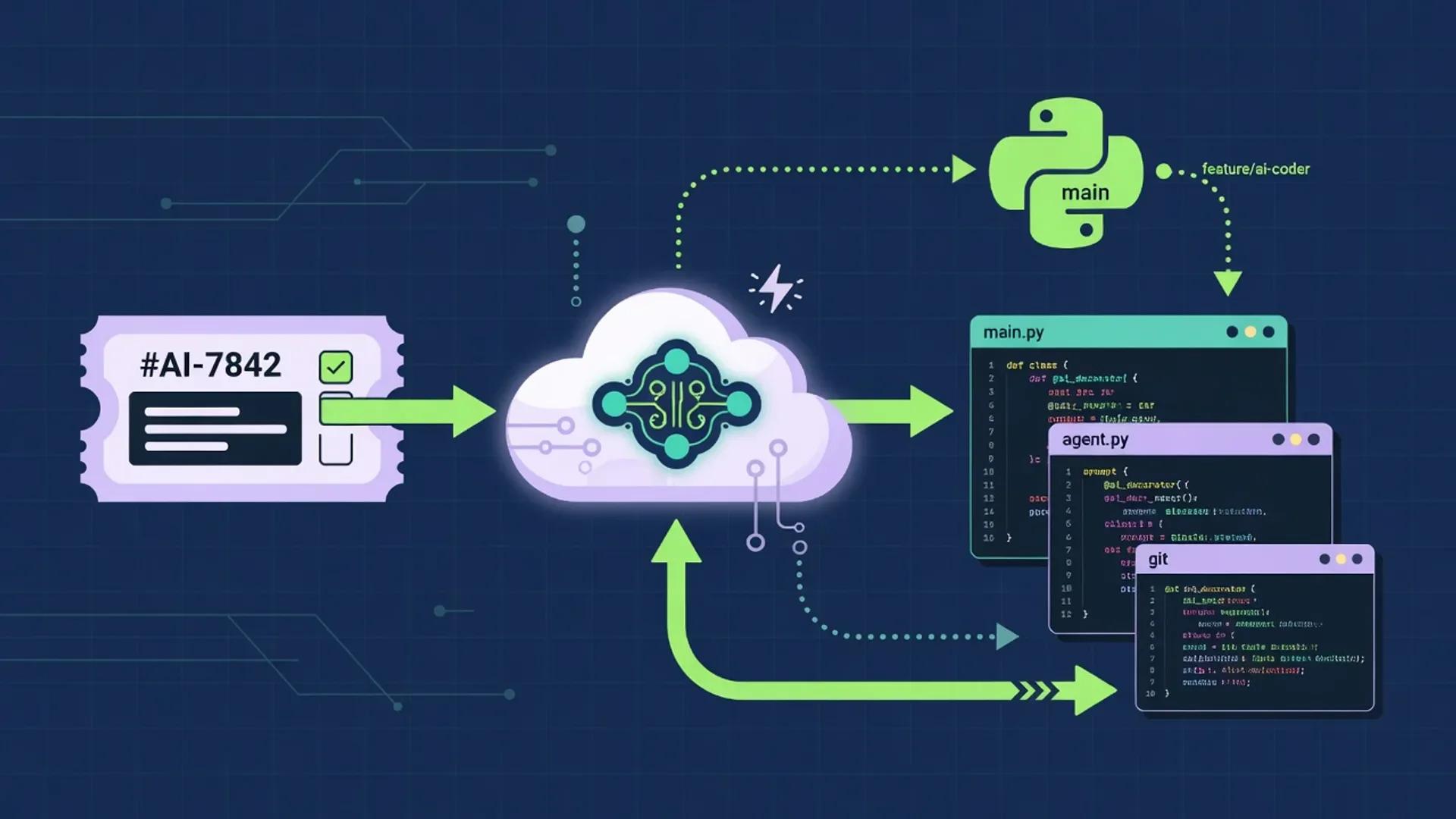
A multi-step AI coding workflow that keeps humans in charge of framing, architecture, security, and merge decisions while agents handle research, boilerplate, test scaffolding, and review. Drawn from primary docs and standards published between July 1 and August 2, 2026.
Still deciding?
Browse more head-to-heads
Compare more tools side by side, or explore alternative shortlists.