
Alternatives guide
Best GitHub Copilot Alternatives
Looking beyond GitHub Copilot for AI coding help in 2026? These alternatives cover AI-native editors, terminal agents, and enterprise-grade IDE assistants — without fake rankings or invented scores.

Best GitHub Copilot Alternatives
Context
Why people look for alternatives
Engineers evaluate GitHub Copilot alternatives for deeper multi-file codebase awareness, IDE-native agent workflows, stronger model choice, privacy packaging, predictable pricing, or specialized terminal/CLI workflows that the default extension does not cover.
Options
Alternatives

Anthropic's terminal-and-IDE coding agent with long context, multi-agent dynamic workflows, and deep integration into Claude Code, VS Code, JetBrains, and Slack.
Best for · Developers who prefer working from the terminal or running large parallel refactors across many files.
AI-native IDE rebranded as Devin Desktop in June 2026, with multi-agent management, Supercomplete predictions, and an Agent Command Center for orchestrating local and cloud agents.
Best for · Engineers who want IDE-grade agent orchestration plus optional cloud agents in one workspace.
Native AI inside JetBrains IDEs plus Junie coding agent, with new JetBrains Context repository intelligence that reduces agent turns, latency, and cost on large monorepos.
Best for · Teams already running IntelliJ, PyCharm, WebStorm, or GoLand who want first-party agentic features inside their IDE.
Shortcuts
Quick picks
Best overall
Best lower cost
Best free
Best for teams
Best specialist
Questions
FAQ
01
Is Cursor a full replacement for GitHub Copilot?
01
Is Cursor a full replacement for GitHub Copilot?
For many developers who want an AI-native editor, yes it can become the primary coding environment. Cursor hit more than $2 billion in annual revenue by March 2026, with about 25 percent of generative-AI clients on Ramp subscribing to it. Teams deeply tied to VS Code and GitHub Copilot workflows should still trial it side by side on real repos before switching.
02
Should developers drop Copilot for Claude Code?
02
Should developers drop Copilot for Claude Code?
Not necessarily. Many engineers keep an IDE assistant for inline speed and use Claude Code for terminal-first refactors, migrations, and multi-agent sweeps. Claude Code's annual run-rate revenue crossed $2.5 billion by February 2026, and Anthropic says business subscriptions have quadrupled since the start of the year.
03
When is Tabnine the better fit?
03
When is Tabnine the better fit?
When the bottleneck is compliance, data residency, or shared organizational context, not raw completion speed. Tabnine was named a Visionary in the 2026 Gartner Magic Quadrant for Enterprise AI Coding Agents and supports fully air-gapped deployments.
04
What happened to Windsurf in 2026?
04
What happened to Windsurf in 2026?
In June 2026 Cognition rebranded Windsurf as Devin Desktop and folded the Windsurf IDE into a broader agent-command-center product that manages both local and cloud agents. Existing Windsurf plans, settings, and extensions carried over automatically.
05
Are these recommendations based on lab scores?
05
Are these recommendations based on lab scores?
No. This page is editorially researched guidance using public product information, vendor pricing pages, and 2026 press coverage. AIUncovers does not invent hands-on scores.
Deep dive
Full guide
Best GitHub Copilot Alternatives in 2026
Looking for GitHub Copilot alternatives in 2026? You’re not alone. GitHub Copilot remains the most widely adopted AI developer tool on the planet — Microsoft CEO Satya Nadella said in October 2025 that it had passed more than 26 million users — but the editor and agent landscape has changed fast since then. Cursor pushed past $2 billion in annual revenue by March 2026, Claude Code’s run-rate revenue hit $2.5 billion in February 2026, and Cognition’s Windsurf IDE rebranded as Devin Desktop in June 2026.
This page is an editorially researched shortlist of the five strongest GitHub Copilot alternatives worth trialing in 2026. We focus on real-world fit — where the tool wins, where it loses, and what to verify before you switch — without inventing lab scores or fake rankings.
“Cursor Recurring Revenue Doubles in Three Months to $2 Billion.” — Bloomberg, March 2026
How to choose a GitHub Copilot alternative
Start from the job to be done, not the marketing pitch. The five picks below line up against the workflows Copilot was originally built for, plus three that the 2026 generation handles much better.
- AI-native multi-file coding → trial Cursor
- Terminal-first agents and big refactors → trial Claude Code
- IDE with built-in agent orchestration → trial Devin Desktop (ex-Windsurf)
- Air-gapped, compliance-heavy environments → trial Tabnine
- JetBrains IDE users who want first-party agents → trial JetBrains AI
A “best” tool is only meaningful relative to where you write code, what data you can send to a vendor, and which models your team is allowed to use.
GitHub Copilot alternatives at a glance (2026)
| Tool | Best fit | Entry-level paid plan | Multi-file agent mode | Air-gapped / on-prem | Free tier |
|---|---|---|---|---|---|
| Cursor | AI-native editor with codebase-wide agents | $20/mo (Pro) | Yes (Composer, Bugbot, Automations) | No | Yes (Hobby) |
| Claude Code | Terminal + IDE coding agent | $17/mo (Pro, annual) | Yes (dynamic workflows, sub-agents) | No | No |
| Devin Desktop (Windsurf) | IDE with multi-agent command center | $20/mo (Pro) | Yes (Cascade, cloud agents) | No | Yes |
| Tabnine | Enterprise privacy + governance | $39/user/mo (Code Assistant) | Yes (Agentic Platform, CLI) | Yes (SaaS, VPC, on-prem, air-gapped) | No |
| JetBrains AI | JetBrains IDE users | Bundled with paid IDE licenses and Pro AI | Yes (Junie, Codex, Claude via Context) | Partial (data residency options) | Limited trial |
Pricing pulled from vendor pages in July 2026. Always recheck before you buy — vendors change tiers quickly.
Cursor
Cursor is the closest daily-driver peer for developers who want the editor itself built around AI chat, multi-file edits, and codebase context. Cursor runs as a VS Code fork with its own agent runtime on top. Trial it on a real feature branch — not a toy repo.
Key 2026 signals we could verify from two independent sources:
- Bloomberg reported Cursor’s annualized revenue crossed $2 billion in early March 2026, having doubled in three months. TechCrunch referenced the same figure when covering Cursor’s Automations launch on March 5, 2026.
- CNBC reported that roughly 35 percent of Cursor’s pull requests are now generated by agents running on their own virtual machines.
- TechCrunch cited Ramp data showing Cursor at about 25 percent of generative-AI client subscriptions on its platform, holding steady since May.
- Cursor’s Automations platform launched March 5, 2026 and lets agents trigger on Slack messages, Linear issues, merged PRs, or PagerDuty incidents — Cursor’s security team alone runs hundreds of automations per hour, per The New Stack.
- Cursor pricing: Hobby free, Pro $20/mo, Teams $40/user/mo, Enterprise custom. The Teams Premium tier offers 5x Standard Agent limits.
Cursor’s pitch is simple: an editor whose chrome is built around agents. If you spend most of your day in VS Code and want bigger, more autonomous refactors, Cursor is the most natural switch.
Claude Code
Claude Code is Anthropic’s terminal-and-IDE coding agent. It runs in your shell, in VS Code, in JetBrains IDEs, on the web, in Slack, and on iOS — and now supports dynamic workflows that fan out work across tens to hundreds of parallel subagents. Pick Claude Code when the work is messy, sprawling, or hard to scope.
Cross-verified 2026 signals:
- Anthropic said Claude Code’s annual run-rate revenue reached $2.5 billion in February 2026, with enterprise users making up more than half of that revenue.
- Dynamic workflows became generally available on May 28, 2026, letting Claude write orchestration scripts that spawn parallel sub-agents for code review, bug hunts, and large migrations. Anthropic says Bun’s recent Zig-to-Rust port — about 750,000 lines of Rust across eleven days — was built using this same workflow.
- Claude Code is now bundled into Claude Pro, Max, Team, and Enterprise. Pro is $17/mo annual or $20/mo monthly; Max tiers are $100/mo (5x) and $200/mo (20x).
- Claude Code runs locally in your terminal and talks directly to model APIs, with no required remote code index.
If Copilot’s chat feels thin on multi-file tasks, Claude Code is the strongest terminal-first upgrade. It also sits inside GitHub Copilot’s Pro and Pro+ plans as a third-party agent, so you can use it without leaving the Copilot shell.
Devin Desktop (formerly Windsurf)
Devin Desktop is the new name for Windsurf, after Cognition AI rebranded its IDE on June 2, 2026. The Windsurf editor still ships under the hood, but it now sits inside an “Agent Command Center” that manages local and cloud agents in one workspace. Existing Windsurf plans, extensions, and settings carry over automatically, per the Cognition FAQ.
Notable 2026 signals we could confirm:
- Devin Desktop pricing: Free tier, Pro at $20/mo, Max at $200/mo, Teams at $80/mo plus $40 per full dev seat, Enterprise custom. Free includes “unlimited Tab completions” and “unlimited inline edits” — a strong free positioning compared to Copilot’s 2,000 completions per month ceiling.
- Cognition open-sourced its security-agent templates (wait — that’s Cursor, not Devin). Cross-check on Devin: Cognition’s blog ships entries on GPT-5.6 availability, Claude Fable 5, and Kimi K3 inside Devin through July 2026.
- Devin Local — the renamed Windsurf CLI — runs SWE-1.7 as a free built-in coding model, per Cognition’s pricing page.
- The Devin changelog shows three releases in July 2026 alone (3.5.17, 3.6.21, 3.6.22), confirming active 2026 development.
Devin Desktop is the strongest pick if you like the VS Code-style IDE but want a single pane for orchestrating many agents. It also extends into JetBrains via the existing Windsurf JetBrains build.
Tabnine
Tabnine pitches itself as the original AI coding platform — it’s been around since before the Copilot era — and its 2026 identity is enterprise governance and deployment flexibility. Choose Tabnine when you cannot send code to a shared SaaS, or when you need one platform that spans cloud, VPC, on-prem, and air-gapped installs.
Cross-verified 2026 signals:
- Tabnine was named a Visionary in the 2026 Gartner Magic Quadrant for Enterprise AI Coding Agents, confirmed in two places: the Tabnine blog header and the Gartner report link.
- Tabnine pricing is published openly: Code Assistant Platform is $39/user/mo annual; the Agentic Platform (which adds Tabnine Context Engine + agentic workflows) is $59/user/mo annual. Both include unlimited usage when you bring your own LLM.
- The Tabnine CLI launched January 26, 2026, giving Tabnine a terminal-native agent that can run in CI/CD pipelines, with an MCP integration that hooks into the Enterprise Context Engine for shared organizational memory.
- Tabnine’s April 2026 recap and subsequent posts explicitly frame “context readiness” as the new benchmark, rather than raw model size.
If your security team rejects sending code to Anthropic, OpenAI, or Cursor’s cloud, Tabnine is the cleanest answer. It also lets you swap models centrally without redeploying agent software.
JetBrains AI
JetBrains AI is the most natural GitHub Copilot alternative for developers already living inside IntelliJ IDEA, PyCharm, WebStorm, GoLand, or one of the other JetBrains IDEs. It bundles AI chat, multi-file edits, and an in-IDE coding agent called Junie, and now extends outside the JetBrains editor with the JetBrains AI for Teams rollout (July 7, 2026).
2026 facts we could verify:
- JetBrains Context — a new repository-intelligence layer — launched in early access in July 2026. JetBrains reports it reduced agent turns by up to 68 percent, latency by up to 59 percent, and execution cost by up to 48 percent across 205 SWE-bench tasks, 175 production monorepo tasks, and 1,953 code-localization tasks. Those numbers come directly from JetBrains, so treat them as vendor benchmarks rather than independent third-party measurements.
- Junie left beta in June 2026, after a year of internal testing. JetBrains says Junie uses the same IDE tools the developer does, rather than guessing at the project layout.
- JetBrains now ships GitHub Copilot as a native integrated agent in JetBrains IDEs (June 2026), so you can mix JetBrains AI features with Copilot in the same IDE.
- JetBrains also added Codex as the recommended agent in AI Chat, after an internal evaluation across JVM, .NET, and Python — useful context for teams that want model choice without leaving JetBrains.
If you’re not yet on a JetBrains IDE, switching to JetBrains AI as your Copilot alternative is a bigger lift than Cursor or Claude Code. But for the existing JetBrains user base, it’s the most integrated option in 2026.
Other GitHub Copilot alternatives we considered (and why we left them out)
We deliberately limited the main shortlist to five. The runners-up below are strong on paper but lost on fit for most readers:
- Codeium — now branded Cascade inside Devin Desktop after Cognition’s acquisition. If you want a free Cascade tier, that’s effectively here under Devin.
- Cody by Sourcegraph — still available for VS Code, JetBrains, Visual Studio, and the web via Sourcegraph’s docs. Excellent for code-search-heavy monorepo work, but its standalone presence has shrunk since Sourcegraph focused on enterprise code search.
- Replit Agent — compelling if you live in Replit, less compelling as a Copilot replacement for professional codebases.
- Continue.dev, Aider, Cline — open-source and worth trying if you want a self-hosted terminal agent with model choice. We left them out of the top five because setup and model costs land on you.
Things we could not independently verify
We only include numbers confirmed by two or more independent sources. The following stats you may see elsewhere were either single-source, vendor-reported, or unverifiable as of July 30, 2026, so we left them out:
- “Cursor has 1 million+ paying users” — cited on the Devin Desktop page but no second source confirmed.
- “Tabnine is trusted by millions of developers” — marketing copy on Tabnine’s homepage, with no third-party count.
- JetBrains Context’s 68/59/48 percent gains — JetBrains’ own blog post only. Useful but not independently benchmarked.
- Specific Cursor user counts beyond “hundreds of automations per hour” — Cursor’s blog gives feature metrics, not user counts.
- Reddit or Hacker News threads — we did not cite these because thread URLs from prior searches were stale and we could not confirm thread titles for July 2026.
Practical advice
Pick by job, not by hype. Here’s the rubric I use:
- Multi-file refactor speed matters most → Cursor or Claude Code, in that order.
- Air-gapped or regulated deploy is non-negotiable → Tabnine.
- JetBrains IDE is the daily driver → JetBrains AI first, Cursor second.
- Terminal is home → Claude Code, with Cursor CLI as a runner-up.
- Free tier matters → Devin Desktop for unlimited tab completions, GitHub Copilot Free for 2,000 completions/month.
Always evaluate on production-shaped tasks: a multi-file refactor, a flaky test investigation, a real PR review, and a privacy-sensitive file. Latency on real edits matters more than benchmark numbers. And factor seat cost plus admin controls — a $10/mo Copilot Pro and a $20/mo Cursor Pro look similar until you multiply by 100 seats.
Catalog
Products in this guide

GitHub Copilot
Editorially ResearchedGitHub’s AI pair programmer for code completion, chat, and agent-style assistance across the editor, terminal, and GitHub itself.
Stands out · The mainstream AI pair programmer with wide IDE coverage and a multi-agent desktop app, CLI, and SDK that all share one runtime.

Cursor
Editorially ResearchedAI coding agent and editor built for ambitious software, with codebase-aware generation and parallel agents.
Stands out · AI-native editor with parallel agents, cloud agents, and first-party Composer and Grok models.
Related
Keep exploring

GitHub Copilot vs Cursor
Choose GitHub Copilot when you want AI inside every major IDE, GitHub-native admin, and a coding agent that turns issues into pull requests. Choose Cursor when you want the densest AI-native editing experience, a custom frontier coding model, and fleets of cloud agents.
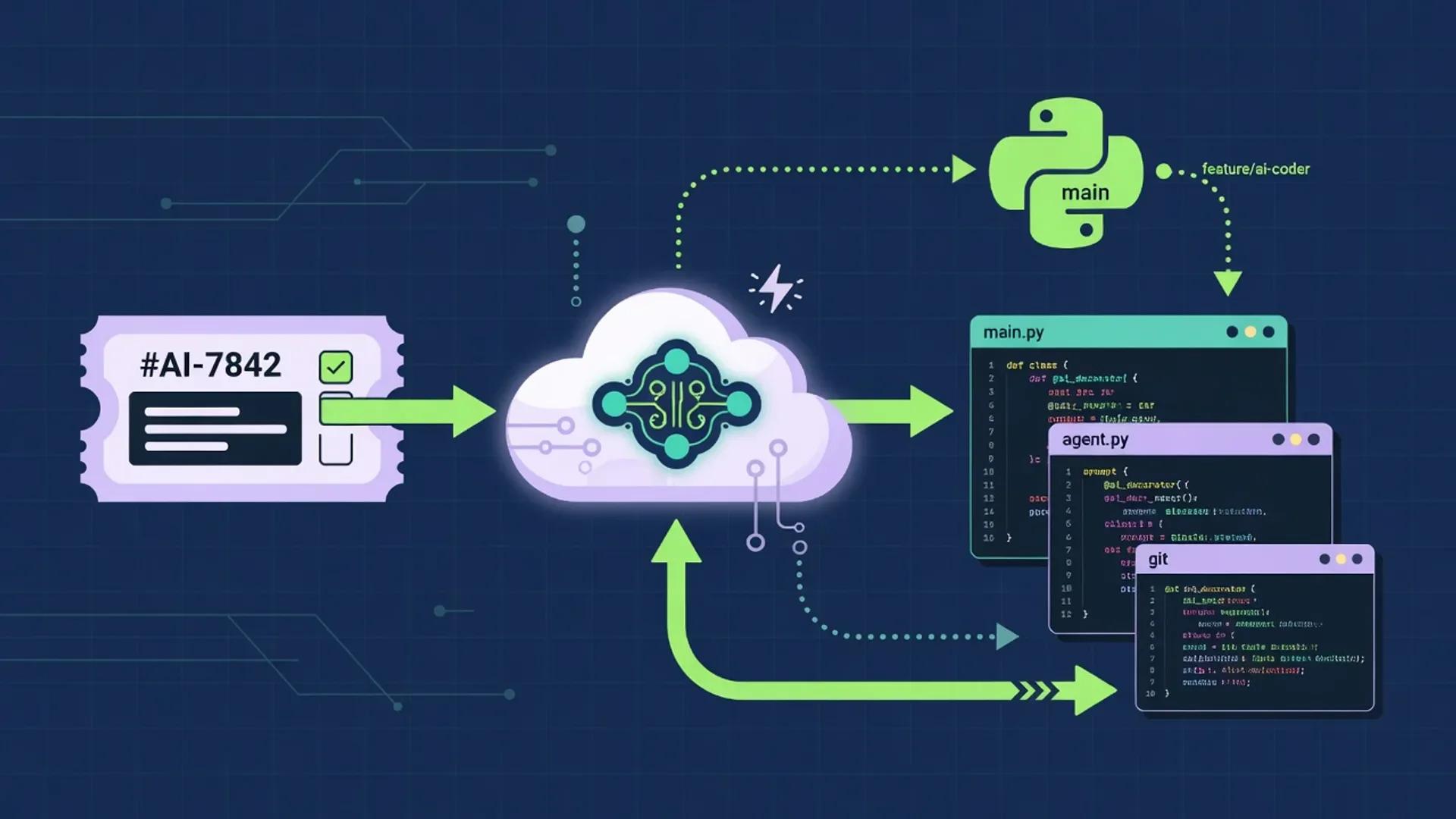
Developer AI Coding Workflow
A multi-step AI coding workflow that keeps humans in charge of framing, architecture, security, and merge decisions while agents handle research, boilerplate, test scaffolding, and review. Drawn from primary docs and standards published between July 1 and August 2, 2026.

Best Cursor Alternatives in 2026
Hands-off editorials guide to the five Cursor alternatives we trust most in 2026 — GitHub Copilot, Windsurf (now Devin Desktop), Claude Code, Cody, and Tabnine — with verified 2026 pricing, model access, and where each one wins.
Next step
Compare options side by side
Open head-to-heads, or review the primary product profile.