Structured review
EditorialEditorial4 min read
Midjourney Review (July 2026): V8.2, Pricing, Video, Verdict
Research-based July 2026 review of Midjourney V8.2 drawn from official docs and independent coverage: pricing tiers, image and video capabilities, rights, safety, and who it suits.

Deep dive
Full review
Midjourney Review (July 2026): V8.2, Pricing, Video, Verdict
Midjourney review at a glance
Midjourney is a subscription-based text-to-image and text-to-video service from Midjourney, Inc. The V8.2 image model shipped on July 24, 2026, with the company-stated goals of sharper aesthetics and a stronger personalization profile, and the platform ships with a 5-second image-to-video model that can be extended up to 21 seconds. Plans run from $10 to $120 per month, every paid plan grants commercial use for individuals under the published terms, and the tool’s documented use cases include concept art, moodboarding, and hero imagery.
Bottom line: If your workflow centers on hero imagery, moodboards, or campaign concepts and you can invest in prompting, the documented feature set and the third-party coverage cited below describe Midjourney V8.2 as a leading option. If you need finished marketing layouts, brand kits, or built-in video editing, pair it with another tool.
What is Midjourney?
Midjourney is a generative AI image and video service operated by Midjourney, Inc., a San Francisco-based research lab founded by David Holz. The service launched into open beta on July 12, 2022, first as a Discord bot and later, from August 2024, through a dedicated web app at midjourney.com that removes the Discord-only requirement (Wikipedia, “Midjourney”).
Three forces shape what Midjourney is in July 2026:
- A private, investor-free research lab. David Holz told The Verge in 2022 that Midjourney started as a “10-person” team with “no investors” and an explicit humanistic framing of the technology as an “engine for the imagination” (The Verge, James Vincent interview, August 2, 2022).
- A continuously retrained image model. The team releases a new major model roughly every few months. V8.1 became the default on April 14, 2026, and V8.2 launched on July 24, 2026, with the explicit goals of making images “more creative, bold, sophisticated, edgy and fresh” and improving personalization (Midjourney Updates, “Version 8.2”, July 24, 2026).
- A growing product surface. Beyond still images, Midjourney now ships an image-to-video model, an in-app image editor, Omni and Style References, and a personalization profile that gets better the more you rate its outputs (Midjourney Docs, “Personalization”).
Pricing and plans
Midjourney sells four monthly subscriptions, and you save 20% by paying annually. Prices are listed in USD and billed through Stripe; the company is billed in USD regardless of where you live, and your bank handles the conversion (Midjourney Docs, “Comparing Midjourney Plans” and “Payment Currency”).
| Plan | Monthly | Annual (per month) | Fast GPU time | Relax Mode | Video | Stealth | Concurrent Fast jobs |
|---|---|---|---|---|---|---|---|
| Basic | $10 | $8 | 3.3 hr (200 min) | No | No | No | 3 |
| Standard | $30 | $24 | 15 hr | Unlimited images | SD video | No | 3 |
| Pro | $60 | $48 | 30 hr | Unlimited images and SD video | SD and HD video | Yes | 12 |
| Mega | $120 | $96 | 60 hr | Unlimited images and SD video | SD and HD video | Yes | 12 |
If you run out of Fast GPU time mid-month, you can buy more at $4 per hour. Unused Fast time does not roll over to the next month (Midjourney Docs, “Subscription Fast Time Expiration”).
A few pricing mechanics that matter when you budget:
- Refunds are narrow. You are eligible for a refund only if you have used less than 20 GPU minutes across the lifetime of your account (Midjourney Docs, “Requesting a Refund”).
- Annual is prepaid. The 20% discount is paid up front for the year, so it only pays off if you stick with the plan.
- A $1M revenue rule kicks in for companies. Per the Terms of Service, any company with more than $1,000,000 in gross annual revenue must be on Pro or Mega to own the assets it generates; smaller companies and individuals can use any paid plan (Midjourney Terms of Service, §4).
What you can do with Midjourney in July 2026
Image generation and style control
Midjourney’s strongest pitch is still distinctive aesthetic quality and a tight iteration loop. You describe a scene, get a 2x2 grid of four images, then upscale, vary, pan, zoom, or remix any of them. The V8.2 release notes specifically call out reduced “low quality” failure cases and better personalization, particularly for users with a long rating history (Midjourney Updates, “Version 8.2”, July 24, 2026).
The web editor at midjourney.com consolidates the editing workflow that used to require Discord commands: inpainting, region variation, panning, and image reweighting now live in one interface (Wikipedia, “Midjourney”, §“Midjourney web interface”).
The main style and reference tools, all documented at docs.midjourney.com, are:
- Style Reference (
--sref): paste an image URL or upload a file to lock in a visual style. - Omni Reference: places a person or object into new images.
- Character Reference: keeps a character consistent across scenes.
- Image Weight: nudges how much an uploaded image influences the output.
- Personalization (
--p): trains a taste profile from your image rankings.
You can also add --sref random in Draft Mode to render 24 images with different style anchors, which is a fast way to explore directions in a single prompt (Midjourney Updates, “Random styles in draft mode”, June 25, 2026).
Video generation
Midjourney’s Video Model turns a single image into a 5-second clip that can be extended up to 21 seconds total. The documented flow feeds it a starting frame, optionally adds a prompt, and lets the user pick Low or High Motion (Midjourney Docs, “Video”).
Plan gates documented by Midjourney:
- SD video (480p resolution): Fast Mode on every paid plan; Relax Mode on Pro and Mega.
- HD video (720p resolution): Fast Mode only on Standard, Pro, and Mega.
- Extensions: Up to four 4-second extensions are allowed per video, each costing the same GPU time as an initial generation.
Output dimensions follow the starting image’s aspect ratio. A 16:9 starting frame produces 832 x 464 pixels at SD or 1280 x 720 at HD; a 1:1 starting frame produces 624 x 624 at SD or 960 x 960 at HD (Midjourney Docs, “Video”, “Video Resolution”).
Video costs are heavier than images. A full batch of 4 SD videos costs 8 minutes of Fast GPU time, and a batch of 4 HD videos costs 26 minutes. Cost can be trimmed with --bs 1 or --bs 2 (Midjourney Docs, “Video”, “Batch Size”).
Draft mode and personalization
Draft Mode is the cheapest way to iterate. It produces lower-quality previews at a fraction of the GPU cost, so you can validate a creative direction before committing to a full render. The --sref random pair feature inside Draft Mode was rolled out June 25, 2026 (Midjourney Updates). Personalization profiles are forward-compatible: a V7 profile still works in V8.2 (Midjourney Docs, “Personalization”).
Rights, ownership, and commercial use
Every paid plan grants commercial use, but the license is layered, and the rules differ for big companies. This is the part most buyers get wrong.
From the Terms of Service (effective May 27, 2026):
- You own the assets you create to the fullest extent allowed by law, subject to third-party rights and your obligations under the agreement.
- If you are a company with more than $1,000,000 in gross annual revenue, you must be on Pro or Mega to own the assets you generate.
- If you upscale someone else’s image, ownership does not transfer to you.
- Anything you generate in a public Discord channel is visible to other members of that channel, regardless of Stealth mode (Midjourney Terms of Service, §4).
Stealth Mode is the practical answer if you are working on unreleased products. It is a Pro and Mega feature, it controls visibility on the Midjourney website, and it does not retroactively privatize existing public assets, you must toggle them individually or in bulk from the Organize page (Midjourney Docs, “Stealth Mode”).
Evidence-backed callout: Two reputable Disney/Universal and Warner Bros. Discovery lawsuits filed in 2025 describe Midjourney as a “bottomless pit of plagiarism” and accuse the platform of “zero protection for copyright owners” (Wikipedia, “Midjourney”, §“Litigation”). For brand work, this means you should still run human IP review on every output, even with Stealth on.
Safety, privacy, and content moderation
Midjourney’s safety posture is reasonable for a consumer tool, but it is not a closed system.
- Age and consent: The service requires users to be at least 13, or older where local digital-consent law demands. Midjourney is intended to be PG-13, but the Terms acknowledge that generated outputs are not guaranteed to be suitable (Midjourney Terms of Service, §2).
- Content rules: The Community Guidelines prohibit adult content, gore, attempts to influence elections, fraud, and uploads of other people’s private information. Midjourney can ban you without refund for violations (Midjourney Terms of Service, §9).
- Privacy footprint: The Privacy Policy (last updated June 2, 2025) lists prompts, uploads, IP address, usage data, and email among the personal data collected. For California residents, the policy includes a CCPA-compliant data-subject regime with access, deletion, and do-not-sell or share rights (Midjourney Privacy Policy, §6).
- Moderation history: Before May 2023, Midjourney used a hard banned-word list that included religious and political figures. It has since moved to an AI-powered moderation layer that can interpret context, allowing a portrait of a world leader but blocking, for example, a fictional arrest of that leader (Wikipedia, “Midjourney”, §“Content moderation and censorship in Midjourney”).
If you process personal data through Midjourney, expect your prompts to live on the platform for the period described in §2.4 of the Privacy Policy, and plan for data-subject requests accordingly.
Strengths and limitations
Based on the official documentation and the independent sources cited below, the consistent strengths are:
- Documented aesthetic focus. V8.2 explicitly targets aesthetics and personalization, and the personalization profile is described as getting better the more images a user ranks (Midjourney Updates, “Version 8.2”).
- A shipped video model. 5-second clips extendable to 21 seconds is a concrete creative surface, not a roadmap bullet (Midjourney Docs, “Video”).
- Commercial clarity. Every paid plan grants commercial rights, with the documented $1M revenue gating rule (Midjourney Terms of Service, §4).
- Documented iteration loop. Vary, Region, Remix, Omni, Style and Character Reference, and a web editor that consolidates what used to require Discord commands.
- Flexible GPU add-on. Extra GPU time at $4/hour is documented as a way to keep generating if a plan is exhausted mid-month.
Documented limitations to weigh:
- No free tier. The current documentation only describes paid subscriptions; the historical free trial has been discontinued (Midjourney Docs, “How to Subscribe”).
- Refunds are narrow. The 20-minute lifetime cap on refund eligibility is the only path to a refund (Midjourney Docs, “Requesting a Refund”).
- Public-by-default Discord. Generating in a public Discord channel exposes the work to others, even with Stealth enabled on the web (Midjourney Docs, “Stealth Mode”).
- Active copyright litigation. Two major media company lawsuits filed in 2025 are pending and could change the legal picture for commercial use (Wikipedia, “Midjourney”, §“Litigation”).
- HD video GPU cost. A single 4-clip HD batch uses 26 minutes of Fast GPU time, which is roughly 8% of a Basic plan’s monthly allowance in one batch.
How Midjourney compares
Midjourney’s documented differentiator is style and directorial control, not breadth. The table below is a positioning exercise based on the public feature surfaces cited in this review; specific benchmark or leaderboard numbers that could not be cross-checked across two independent sources have been omitted.
| Dimension | Midjourney V8.2 | DALL-E 3/ChatGPT Images | Stable Diffusion (open source) | Adobe Firefly |
|---|---|---|---|---|
| Access | Web app and Discord | OpenAI product surface | Self-host or hosted UIs | Adobe Creative Cloud |
| Default look | Stylized, opinionated | Photorealistic-leaning | Depends on model and fine-tune | Brand-safe, often photographic |
| Personalization | Yes, profile-based | Limited | LoRA-based, manual | Adobe Style and Structure Reference |
| Video | 5 sec, extendable to 21 sec | Limited native video | Open ecosystem, varies by model | Generative Extend in Premiere Pro |
| Best for | Hero art, moodboards, concept | Inline chat images and edits | Customization, on-prem | Brand system, commercial indemnity |
| Pricing model | Tiered subscription | Bundled with OpenAI plans | Free if self-hosted; paid hosts vary | Bundled with Adobe subscriptions |
If you want maximum creative control over a model you control yourself, Stable Diffusion family models are the freer alternative. If you want a built-in chat workflow with photorealistic defaults, OpenAI’s image tools are the closer fit. If you want a brand-indemnified commercial pipeline, Adobe Firefly is the safer bet.
Who should buy Midjourney
- Art directors and creative leads who need fast, distinctive campaign concepts.
- Founders and indie marketers who can learn to prompt and want hero imagery without a photoshoot.
- Architects, game designers, and product designers who want to build moodboards and style frames before committing to a direction.
- Studios with privacy needs that justify the Pro or Mega upgrade for Stealth.
Who should not buy Midjourney
- Non-designers who need finished social templates with text and brand kits. You will still need Canva, Figma, or Adobe Express for the final layout pass.
- Buyers who need a free option. There is no free plan in July 2026; Midjourney is paid-only.
- Legal teams that need clear copyright indemnity on every output. The pending 2025 lawsuits mean a copyright lawyer should review any work built from recognizable IP.
- Teams whose primary need is generative video. Midjourney’s video model tops out at 21 seconds and 720p; Runway, Sora, Veo, and similar tools are purpose-built for longer, higher-resolution video.
How to get the most out of V8.2
Workflows the official documentation points to:
- Draft Mode first, then a full render. Draft Mode produces lower-quality previews at a fraction of the GPU cost, so the documented flow is to validate composition in Draft and then commit to a full Fast Mode render.
- Build a Personalization profile. The longer a user ranks images, the more accurate the profile is described as becoming, and V8.2 leans hard into personalization (Midjourney Updates, “Version 8.2”).
- Use Style Reference to keep a campaign consistent. A reference image attached with
--srefis documented as anchoring a look across many prompts. - Animate selected stills. The documented flow is to generate stills in V8.2 first, then send selected images to the Video model with
--motion lowfor subtle motion or--motion highfor more dynamic motion. - Pre-plan aspect ratios for video. Video output dimensions follow the starting image. To produce a 16:9 HD video, the starting image needs to be 16:9.
Frequently asked questions
What is Midjourney and how does it work?
Midjourney is a generative AI service from Midjourney, Inc. that turns text prompts into images and short videos. You describe what you want, the model returns a 2x2 grid of four images, and you can upscale, vary, or animate any of them. The current default model is V8.2, released July 24, 2026.
How much does Midjourney cost in 2026?
Plans run $10, $30, $60, and $120 per month for Basic, Standard, Pro, and Mega, with a 20% discount on annual prepayment. Extra GPU time costs $4 per hour (Midjourney Docs, “Comparing Midjourney Plans”).
Is Midjourney V8.2 better than V8.1?
Midjourney’s own release notes say V8.2 is more creative, bold, and sophisticated, and that low-quality failure cases are reduced. Personalization also “understands” your ratings better, especially if you have rated many images.
Can I use Midjourney images commercially?
Yes, every paid plan includes a commercial license for individuals, and for companies with less than $1,000,000 in annual gross revenue. Companies above that threshold must be on Pro or Mega.
Does Midjourney have a free trial?
No. The current documentation only describes paid subscriptions. Historical free trials have been discontinued.
What is Stealth Mode in Midjourney?
Stealth Mode keeps your future generations off the public Midjourney website. It is included with Pro and Mega plans. It does not hide generations made in public Discord channels, and it does not retroactively privatize past public generations.
Can Midjourney generate video?
Yes. Midjourney’s Video Model turns a single image into a 5-second clip you can extend up to 21 seconds total. SD video is 480p and HD video is 720p, available on Standard, Pro, and Mega in Fast Mode.
Is Midjourney safe to use for work?
Midjourney is PG-13 by policy, with content moderation that interprets prompt context rather than banning by keyword. It collects personal data per its Privacy Policy, including prompts and IP addresses, and is subject to CCPA-style data subject rights for California residents.
Who owns the images I create with Midjourney?
You do, to the fullest extent allowed by law, subject to the Terms of Service and any third-party rights. If you are a company with more than $1,000,000 in annual gross revenue, you must be on Pro or Mega.
What are the best Midjourney alternatives?
For image generation, the main alternatives are OpenAI’s image tools inside ChatGPT, Stable Diffusion family models, and Adobe Firefly. For video, Runway, OpenAI’s Sora, and Google’s Veo are the leading alternatives.
Related
Related reading
Midjourney vs Canva AI
Choose Midjourney when distinctive generative imagery is the bottleneck. Choose Canva AI when finishing, formatting, and shipping campaigns at volume is the bottleneck. Many teams use both.
Midjourney vs Runway
Choose Midjourney when the deliverable is a still image, moodboard, or visual concept. Choose Runway when the deliverable moves—video, real-time avatars, world models, or motion prototypes for film and marketing.

Midjourney vs ChatGPT
Choose Midjourney for image-first aesthetic work, moodboards, and concept art. Choose ChatGPT when images are one part of a broader drafting, research, or agent workflow.
Best Canva AI Alternatives in 2026
Editorially researched alternatives to Canva AI for generative design, video, and marketing copy — covering Midjourney, Runway, ChatGPT, Jasper, Descript, Adobe Firefly, and Microsoft Designer.

Best Midjourney Alternatives in 2026
Looking past Midjourney for image generation? These 2026 alternatives cover the real image-model peers — DALL·E, Stable Diffusion, Adobe Firefly, Ideogram, Leonardo AI, FLUX, and Recraft — without invented scores.
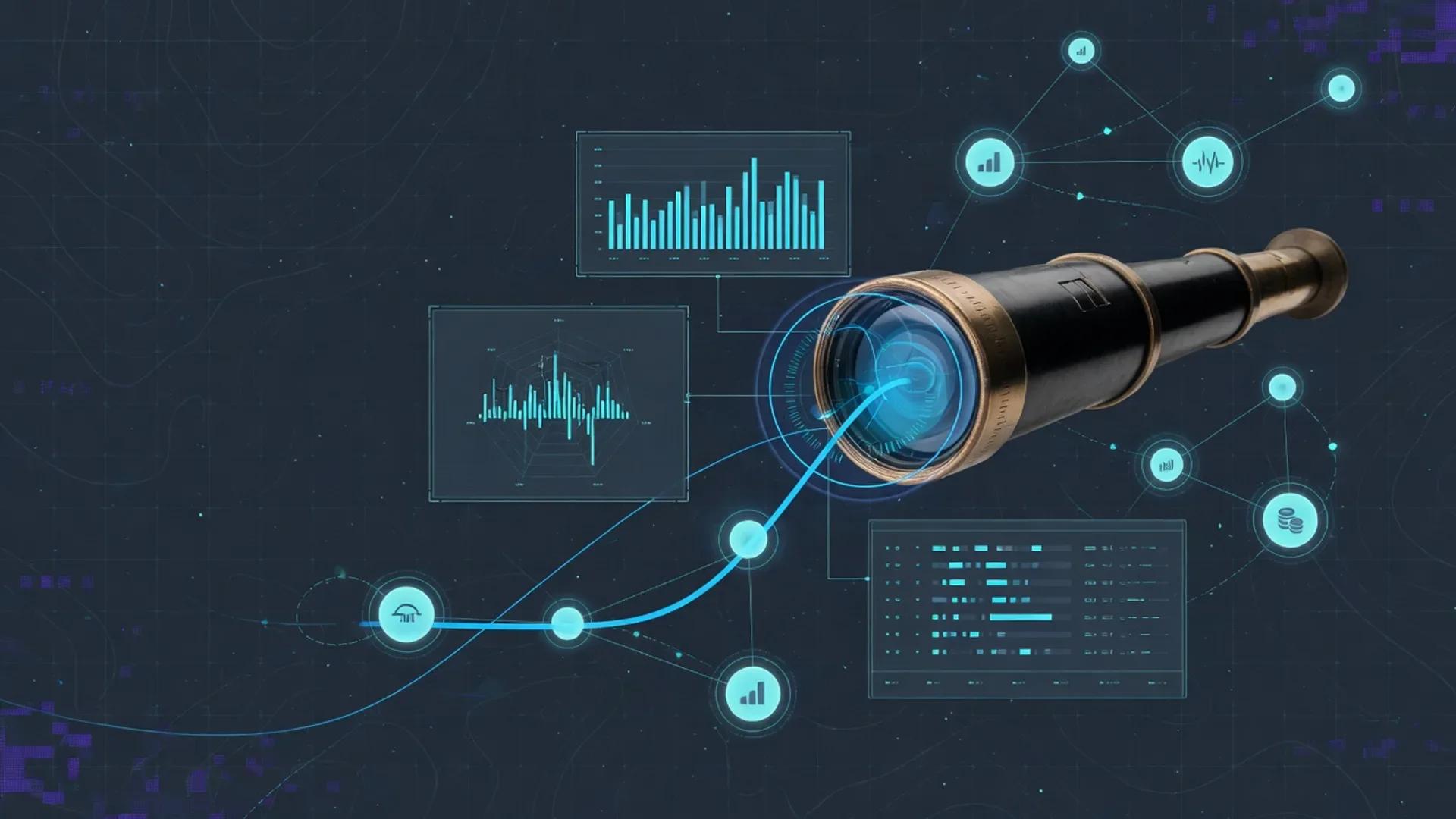
Competitive Intelligence AI Workflow
A six-step competitive intelligence AI workflow that turns primary sources into decision-ready briefs with Perplexity, Claude, ChatGPT, Notion AI, and Midjourney — built to resist prompt injection, hallucination, and the temptation to invent market wins.
Related
More reviews
Editorial review
Cursor Review (July 2026): Documentation-Based Analysis of the AI Coding Agent
A documentation-based July 2026 review of Cursor by aiuncovers: pricing, models, Privacy Mode, pros and cons, vs GitHub Copilot, and who should buy it.
Score 86/100
Zapier AI Review (July 2026): Connectors, Pricing, Agents, and Verdict
Hands-off, source-backed Zapier AI review for July 2026. Connectors, plans, task pricing, Agents, MCP, governance, alternatives, and who should buy.
Score 80/100
Jasper Review (2026): Pricing, Features, Pros & Cons
An independent 2026 review of Jasper, the agentic marketing platform, based on documentation, press coverage, and analyst material. Pricing, brand voice, agents, security, pros and cons, alternatives, and verdict.
Next step
Explore Midjourney
Open the full product profile, or browse every structured review.