
Comparison
ChatGPT vs Claude
OpenAI’s ChatGPT now runs on the GPT-5.6 family (Sol, Terra, Luna) launched July 9, 2026, while Anthropic ships Claude Fable 5 and the new Claude Opus 5 (July 24, 2026) — and the gap between the two has narrowed to a question of taste, ecosystem, and what your team is actually trying to ship.

ChatGPT vs Claude
Executive verdict
In July 2026 the two assistants are closer than they have ever been. GPT-5.6 Sol leads most agentic and design benchmarks, Claude Fable 5 and Claude Opus 5 still own the hardest reasoning, coding, and finance evals, and both companies are pushing hard on agent harnesses. The honest call: most professionals will be productive with either, so the decision comes down to ecosystem fit, price predictability, and which writing voice matches your work.
Best for · Pick ChatGPT if you want a broad multimodal surface, GPTs, and the densest app ecosystem. Pick Claude if you want careful long-form writing, long-running agents, and the strongest coding-and-doc package per token.
Head to head
Dimensions
Writing quality and tone
Anthropic’s Claude family (including Opus 5) is consistently praised for careful, nuanced prose and long-form synthesis. ChatGPT with GPT-5.6 Sol is now a much stronger stylistic chameleon and is the better pick when you need presentations, design polish, and fast style shifts.
General versatility and ecosystem
ChatGPT ships the larger product surface: GPTs, ChatGPT Work, ChatGPT Sites, Plugins, a desktop app that bundles Chat/Work/Codex, broad app connectors, and 1B+ MAU with a deep integration footprint (Microsoft 365, Google Drive, Slack, GitHub).
Long-document analysis
Both ship 1M-token context. Claude has historically been preferred for careful, large-document synthesis; Claude Fable 5 and Opus 5 strengthen that with mid-conversation system messages, context compaction, and memory.
Coding assistance
Claude Fable 5, Claude Mythos 5, and Claude Opus 5 top SWE-bench Pro (80.3% / 80.0%) and Anthropic’s own FrontierCode 1.1. GPT-5.6 Sol wins Artificial Analysis Coding Index (80) and Terminal-Bench 2.1 (88.8% standard, 91.9% Ultra). Net: Claude wins the “hard engineering task in a real repo” case; ChatGPT wins the “fast, tool-heavy agent loop” case.
Multimodal and design
ChatGPT is multimodal in the broad consumer sense (voice with GPT-Live, image generation, slides, design taste). Claude is stronger on vision comprehension and design judgment inside chat but does not generate images natively in the same product.
Pricing access model
Both offer free tiers, $17–$20 personal plans, $20–$25 team plans, and custom enterprise tiers. OpenAI’s API: GPT-5.6 Sol $5/$30 per MTok, Terra $2.50/$15, Luna $1/$6 (with 80% Luna cut on July 30, 2026). Anthropic’s API: Claude Fable 5 $10/$50, Claude Opus 5 $5/$25, Claude Sonnet 5 $2/$10 through Aug 31, 2026.
Fit
Audience recommendations
Writers, editors, and consultants
Start with Claude for long-form drafting, then keep ChatGPT for fast style and tone remixes. Both will surprise you.
Suggested: claude
Generalists and mixed-role teams
If one assistant has to cover every job, ChatGPT is the safer default in July 2026 thanks to its product surface and integrations.
Suggested: chatgpt
Product managers
Either works for PRDs and synthesis. Choose Claude if your team is shipping docs, choose ChatGPT if you want a desktop app that also builds slides and sites.
Engineers and code-heavy teams
Use Claude Opus 5 or Claude Sonnet 5 for hard repo work, and ChatGPT (GPT-5.6 Sol) for tool-heavy agent loops and code review at scale. Most senior teams keep both.
Suggested: claude
Enterprise procurement
Compare on three axes: data residency (OpenAI 10 regions, Anthropic 10+ regions), admin controls, and HIPAA. Both offer BAAs and SOC 2 Type II in July 2026.
Deep dive
Full comparison
Quick take
ChatGPT vs Claude in July 2026 is a real choice, not a default. OpenAI’s ChatGPT runs the new GPT-5.6 family (Sol, Terra, Luna) launched July 9, with a price cut on July 30 that pulled Luna down 80% (OpenAI). Anthropic’s Claude is now its deepest lineup ever: Claude Opus 5 shipped July 24, Claude Fable 5 and Claude Mythos 5 rolled out in June, and Claude Sonnet 5 is the cheap-fast workhorse (Anthropic newsroom). If you want one number to anchor the gap: ChatGPT is the bigger product, Claude is the better writer and a touch sharper on the hardest coding and reasoning tasks.
Pull quote: “ChatGPT has 1 billion monthly active app users and ~53% of AI web traffic; Claude is the fastest-growing AI platform in the world, with web share up from ~2% to ~9% in twelve months and app MAU growth around 1,318%.” — Reuters + Similarweb, July 29, 2026
The headline differences, at a glance
| Area | ChatGPT (GPT-5.6 family, July 2026) | Claude (Opus 5 / Fable 5 / Sonnet 5, July 2026) |
|---|---|---|
| Flagship model | GPT-5.6 Sol ($5 / $30 per MTok) | Claude Fable 5 ($10 / $50) and Claude Opus 5 ($5 / $25) |
| Affordable flagship | GPT-5.6 Terra ($2.50 / $15) | Claude Sonnet 5 ($2 / $10 through Aug 31, 2026, then $3 / $15) |
| Cheapest API | GPT-5.6 Luna — $1 / $6 (cut 80% on July 30, 2026) | Claude Haiku 4.5 — $1 / $5 |
| Context window | 256K reasoning context on Plus/Business; 400K on Pro; 1M on Enterprise | 1M tokens standard on Fable 5, Opus 5, Mythos 5, Sonnet 5 |
| Best at | Multimodal, design polish, agent loops, ecosystem breadth | Long writing, long docs, hard reasoning, repo-scale coding |
| Monthly users | ~1B app MAU (May 2026) | 56M app MAU (Q2 2026), growth ~640% YoY |
| Web traffic share | ~53% (down from ~76% a year ago) | ~9% (up from ~2%) |
| Free plan | Yes, with GPT-5.5 Instant | Yes, with usage limits |
| Personal plan | Plus at $20/mo; Pro at $200/mo | Pro at $17/mo ($20 monthly) |
| Team / Business | ChatGPT Business at $25/user/mo | Claude Team at $20/seat/mo |
| Enterprise | Custom; 10-region data residency, ISO 27001, SOC 2, HIPAA BAA | Custom; SOC 2, ISO 27001, HIPAA self-serve (since July 14, 2026) |
| Default data use | No training on Business/Enterprise by default; opt-out on consumer | No training on Team/Enterprise by default; opt-out on consumer |
| Agent surface | ChatGPT Work, Codex, Plugins, Sites, Voice with Video | Claude Cowork, Claude Code, Claude for Chrome, Claude Tag (Slack) |
Sources: OpenAI ChatGPT pricing, OpenAI GPT-5.6 launch, Claude pricing, Anthropic Opus 5 page, Anthropic Fable 5 launch, Reuters June 2 2026, Similarweb July 29 2026.
How I tested this and what I’m leaning on
I rebuilt this comparison on August 1, 2026, after walking through OpenAI’s release notes, the Anthropic newsroom, the Claude Platform release notes, the OpenAI Help Center, Reuters coverage, and Similarweb’s market-share data published July 29. I did not run my own benchmark suite for this update. The numbers in the model table below come from OpenAI, Anthropic, and Artificial Analysis, all of which publish methodologies and footers alongside their charts.
Two things to keep in mind as you read. First, the headline benchmark scores change every few weeks, and the leaderboard often flips between Sol, Fable 5, and Opus 5. Second, the products themselves change faster than benchmarks do: a model that scores one point lower on a chart might still feel better in your specific workflow.
What’s actually new in July 2026
ChatGPT just shipped a whole new model family
GPT-5.6 is now the default ChatGPT model on paid plans, with three tiers that act like a budget dial. OpenAI launched GPT-5.6 on July 9, 2026, with Sol as the flagship, Terra as the balanced everyday model, and Luna as the cheapest fast option (OpenAI GPT-5.6 launch). Then on July 30 OpenAI cut Luna’s price by 80% and Terra’s by 20%, and introduced a new Fast mode in the API that runs up to 2.5× faster on Sol for 2× the price (OpenAI release notes).
In the same window, ChatGPT got a real work surface. ChatGPT Work is now rolling out to Plus, Pro, Business, and Enterprise users as the agent for long-running tasks — research, spreadsheets, slides, even full sites (OpenAI Help Center, July 9). ChatGPT Sites exited private beta and shipped public publishing on the same day. Health in ChatGPT rolled out to US adults on July 23, with explicit non-training protections on medical data (OpenAI Health launch). And on July 29 OpenAI gave 100,000 academic researchers a free year of ChatGPT Pro through a SheerID-verified flow (OpenAI).
On the developer side, the new OpenAI Terraform provider went GA on July 29, and GPT Transcribe / GPT Live Transcribe landed July 28 for file and streaming speech (OpenAI release notes).
Claude answered with a deeper model stack and an enterprise refresh
Anthropic didn’t sit still. It launched Claude Fable 5 and Claude Mythos 5 on June 9, 2026 (Anthropic). Fable 5 is Anthropic’s most capable generally available model and requires a 30-day data retention window for safety work; Mythos 5 is the same model with cyber and bio safeguards lifted, restricted to Project Glasswing partners and a growing trusted access program. The two were temporarily pulled on June 12, then restored on July 1 (Redeploying Fable 5).
Claude Sonnet 5 shipped June 30 with 1M-token context and a $2/$10 intro price through August 31, 2026 (Anthropic). Then on July 24, 2026, Anthropic released Claude Opus 5 — a step-change for the Opus tier, $5/$25 per MTok, the same 1M context as Fable 5, and described in Anthropic’s own launch post as “a step-change improvement for the Opus tier” (Anthropic Opus 5, Claude Platform release notes).
On the app side, Anthropic shipped updated memory for Claude on July 10 (categorized entries instead of a daily summary), Claude Cowork on web and mobile on July 7, and self-serve HIPAA configuration for both Claude Enterprise and the Claude API on July 14 (Claude app release notes).
Benchmarks in July 2026: who actually wins
Benchmarks are close. The real product differences are in how the model is wrapped. On the leaderboards I trust most in mid-2026:
- Artificial Analysis Intelligence Index v4.1 ranks Claude Fable 5 (59.9) ahead of GPT-5.6 Sol (58.9) and well ahead of Claude Opus 4.8 (55.7) and Claude Opus 5 by a hair (OpenAI GPT-5.6, Artificial Analysis).
- Artificial Analysis Coding Agent Index has GPT-5.6 Sol at 80 (SOTA), Claude Fable 5 at 77.2, Claude Opus 4.8 at 72.5 (OpenAI).
- SWE-bench Pro still favors the Claude family: Claude Mythos 5 at 80.3%, Claude Fable 5 at 80.0%, Claude Opus 4.8 at 69.2%, GPT-5.6 Sol at 64.6% (OpenAI).
- Terminal-Bench 2.1 is the flip side: GPT-5.6 Sol at 88.8%, GPT-5.6 Sol Ultra at 91.9%, Claude Mythos 5 at 88%, Claude Fable 5 at 83.1% (OpenAI).
- OSWorld 2.0 (computer use): GPT-5.6 Sol 62.6%, Claude Opus 4.8 54.8%, Claude Fable 5 not separately reported but trails in this eval class (OpenAI).
- BrowseComp: GPT-5.6 Sol 90.4% (92.2% on the multi-agent Ultra config), Claude Mythos 5 88%, Claude Fable 5 84.3% (OpenAI).
- GPQA Diamond: GPT-5.6 Sol 94.6%, Claude Mythos 5 94.6%, Claude Fable 5 92.6% — basically a tie (OpenAI).
- HealthBench Professional: Claude Fable 5 60.9% (the leader in this eval), GPT-5.6 Sol 60.5%, Claude Opus 4.8 53% (OpenAI).
Translation: if your bottleneck is repo-scale coding and doc-heavy analysis, Claude is still a step ahead. If your bottleneck is tool-heavy agents, design polish, or computer use, GPT-5.6 Sol is now the one to beat.
Where ChatGPT tends to win right now
- The widest multimodal surface. GPT-5.6 Sol adds sharper design judgment and computer use. The new GPT-Live voice model (rolled out July 8) powers ChatGPT Voice, including in Work and Codex on desktop (OpenAI). Health in ChatGPT (US, July 23) is a vertical multimodal experience.
- The densest app ecosystem. Plugins, ChatGPT Sites, ChatGPT Work, Codex with Computer Use, ChatGPT for PowerPoint (GA on July 6 for Enterprise/Edu), ChatGPT for Excel/Sheets, and integrations across Microsoft 365, Google Drive, Slack, GitHub, Linear, Figma, and HubSpot. The new desktop app unifies Chat, Work, and Codex in one shell (OpenAI).
- The biggest audience and the biggest moat. 1B MAU on the ChatGPT app (Sensor Tower via Reuters, June 2, 2026) means most of your colleagues and customers already have an account.
- Cheap inference on the cheap tier. The July 30 price cut pulled GPT-5.6 Luna to $1 / $6 per MTok, the lowest published price for a frontier-class model I’m aware of (OpenAI release notes).
Where Claude tends to win right now
- Harder writing, longer documents, harder coding. Fable 5, Opus 5, and Sonnet 5 are the models I still reach for first when a task is a 60-page PDF, a court filing, a financial model with subtle assumptions, or a multi-day refactor. The 1M context window is the default on every Claude 5 model, and Anthropic’s mid-conversation system messages plus context compaction make long sessions feel less lossy (Claude Platform release notes).
- Best-in-class honesty and refusal calibration. Anthropic publishes a separate responsible scaling policy, runs Project Glasswing for defensive cyber, and ships a more conservative refusal profile. The Fable 5 launch post calls out “concerning behavior” scoring and the system card has been public since day one (Anthropic).
- The strongest coding harness for serious engineering. Claude Code (now in the Claude desktop app since Nov 2025) plus Opus 5 at $5/$25 is the model-economics combination most senior developers I know reach for first. Anthropic’s customers publicly report token savings of 50% to 76% when moving to Opus 4.5/Opus 5 with effort control (Anthropic Opus 4.5).
- The fastest-growing AI app on earth. Similarweb’s July 29, 2026 dataset puts Claude’s app MAU growth around 1,318% year over year and Claude’s web share up from ~2% to ~9% in twelve months (Similarweb). Sensor Tower via Reuters put Claude at 56M MAU as of Q2 2026 (Reuters). Claude users who installed the app in Q1 2026 spent 5% less time on ChatGPT one month later.
How I’d actually pick between them in July 2026
If I had to set up a single team this week, I’d ask three questions in this order:
- What does your team write all day? If the answer is memos, briefs, contracts, research reports, or financial models, start with Claude (Opus 5 or Sonnet 5). If the answer is “everything — emails, decks, dashboards, sites, and a little code,” start with ChatGPT (Plus or Business, defaulting to GPT-5.6 Sol).
- What is your most expensive recurring agent loop? If you are paying for tool-heavy agent runs in production, compare GPT-5.6 Sol Ultra against Claude Opus 5 at effort high. On Terminal-Bench 2.1 the difference is 91.9% vs 88% in favor of GPT-5.6 Sol Ultra, but on SWE-bench Pro the Claude family still leads by ~15 points. Pick by workload, not by leaderboard.
- What are your compliance and residency requirements? Both are SOC 2 Type II and ISO 27001 in July 2026. OpenAI ships 10-region data residency and a HIPAA BAA on Enterprise. Anthropic shipped self-serve HIPAA configuration on July 14, 2026, for both Claude Enterprise and the Claude API (Claude app release notes). Fable 5 is the only frontier model in the comparison that requires a 30-day data retention window; that’s a real procurement checkbox for some teams.
People Also Ask: the questions I keep getting
Is Claude better than ChatGPT for coding in 2026? For repo-scale engineering work in real codebases, yes. Claude Fable 5, Mythos 5, and Opus 5 all score 69–80% on SWE-bench Pro; GPT-5.6 Sol scores 64.6% there. For tool-heavy agent loops and computer use, GPT-5.6 Sol wins on Terminal-Bench 2.1 (88.8%) and OSWorld 2.0 (62.6%).
Which is cheaper: ChatGPT or Claude? At the consumer tier, both are $17–$20 per month for a personal plan and around $20–$25 per seat for teams. At the API tier, OpenAI’s GPT-5.6 Luna ($1/$6 after the July 30 cut) is cheaper than Claude Haiku 4.5 ($1/$5) for the cheapest tier, and GPT-5.6 Sol ($5/$30) is more expensive than Claude Opus 5 ($5/$25) and Claude Fable 5 ($10/$50). For coding-and-doc workloads, Opus 5 at $5/$25 with effort control is usually the most cost-efficient of the three flagship models.
Can ChatGPT remember things across chats? Yes. ChatGPT’s improved memory rolled out to Enterprise and Edu on June 25, 2026, and it draws on past chats, files, and custom instructions, with a memory summary users can edit (OpenAI Help Center). Claude’s memory was updated on July 10, 2026 to use categorized entries rather than a daily summary (Claude app release notes).
Does Claude or ChatGPT have a bigger user base? ChatGPT, by a wide margin. Sensor Tower via Reuters put ChatGPT at 1 billion monthly active app users as of May 2026, and Claude at 56 million MAU as of Q2 2026. Claude is growing much faster: about 640% year over year vs ~62% for ChatGPT (Reuters).
Which one should I pay for if I can only afford one subscription? For most people, ChatGPT Plus at $20/month is the better single subscription in July 2026 because of the multimodal surface and the app ecosystem. If your work is writing and analysis first, Claude Pro at $17/month annual is the better buy.
What about privacy and data use? Both companies say they do not train on Team or Enterprise data by default (OpenAI Enterprise Privacy, Anthropic Trust Center). On the consumer tier both offer opt-outs. Fable 5 is the only frontier model that requires 30-day data retention by policy.
Can I use ChatGPT and Claude together? Yes, and most power users do. The cheapest workable combo in July 2026 is ChatGPT Plus for general work, Claude Pro for writing and long docs, and the Anthropic + OpenAI APIs for anything that needs a model you can tune. If you are buying through a vendor, the ChatGPT Business SKU and Claude Team SKU are both designed for that hybrid.
What I still don’t trust about either model
Both can hallucinate, both can over-refuse on legitimate work, and both will still confidently make up a citation that doesn’t exist. Don’t trust either for high-stakes compliance, legal, or medical advice without human review. The new vertical surfaces — Health in ChatGPT, Claude for Excel, ChatGPT for PowerPoint — are useful but explicitly framed by their vendors as assistants, not as authorities. Treat them that way and you won’t get burned.
Bottom line for July 2026
The frontier is genuinely close. On a chart, GPT-5.6 Sol and Claude Fable 5 are within a few points of each other on most reasoning, coding, and knowledge work benchmarks, and the new Claude Opus 5 has just reset the bar on Anthropic’s side. The product surface is where ChatGPT still wins. The writing voice and the most careful long-context reasoning is where Claude still wins.
If you have to pick one subscription, the practical answer in July 2026 is ChatGPT Plus for breadth, Claude Pro for depth. If you have to pick one API model, the practical answer is GPT-5.6 Sol Ultra for tool-heavy agents, Claude Opus 5 for hard coding and long docs. If you have to pick one for the whole team, the practical answer is the one your team will actually open every morning — and that is something only a two-week trial on your real documents can tell you.
Profiles
Products in this comparison

ChatGPT
Editorially ResearchedOpenAI's general-purpose AI assistant for writing, analysis, coding help, and everyday knowledge work.
Stands out · A mainstream, general-purpose AI assistant with the broadest multimodal feature surface and one of the largest everyday user bases for conversational AI.

Claude
Editorially ResearchedAnthropic's AI assistant focused on careful writing, long-context work, and the strongest agentic coding stack as of July 2026.
Stands out · A general-purpose assistant and agent platform optimized for careful writing, 1M-token long-context work, and the strongest agentic coding surface in 2026 — anchored by Opus 5, Sonnet 5, Fable 5, Claude Code, and Claude Cowork.
Related
Keep exploring
HubSpot AI vs ChatGPT
Pick HubSpot AI when the work is contacts, deals, tickets, and campaigns inside HubSpot. Pick ChatGPT when the work is open-ended drafting, research, multi-tool reasoning, or anything not tied to a CRM object.

Notion AI vs Claude
Choose Notion AI when your team's knowledge, projects, and meetings already live in Notion and you want an agent that can take action inside that workspace. Choose Claude when you want the best standalone writing, reasoning, and long-document analysis regardless of which wiki you use.
ChatGPT vs Perplexity
Choose ChatGPT for broad multimodal drafting, domain assistants, and a billion-user ecosystem. Choose Perplexity when source-visible research, citation-first answers, or agentic computer use on local files is the daily bottleneck.

Claude vs Perplexity
Pick Claude when the work product is a polished doc, a multi-file analysis, or a long-running coding agent. Pick Perplexity when the work starts with a question and you need to see the receipts.
Best Canva AI Alternatives in 2026
Editorially researched alternatives to Canva AI for generative design, video, and marketing copy — covering Midjourney, Runway, ChatGPT, Jasper, Descript, Adobe Firefly, and Microsoft Designer.

Best ChatGPT Alternatives in 2026
The best ChatGPT alternatives in 2026 are Claude for general work, Perplexity for cited research, Notion AI for workspace knowledge, GitHub Copilot for GitHub-first coding, and Cursor for agent-led software development.

Best Claude Alternatives in 2026
A researched look at five Claude alternatives—ChatGPT, Google Gemini, Microsoft Copilot, Perplexity, and DeepSeek—plus a sixth pick from Mistral, compared on price, capability, and fit.

Competitive Intelligence AI Workflow
A six-step competitive intelligence AI workflow that turns primary sources into decision-ready briefs with Perplexity, Claude, ChatGPT, Notion AI, and Midjourney — built to resist prompt injection, hallucination, and the temptation to invent market wins.
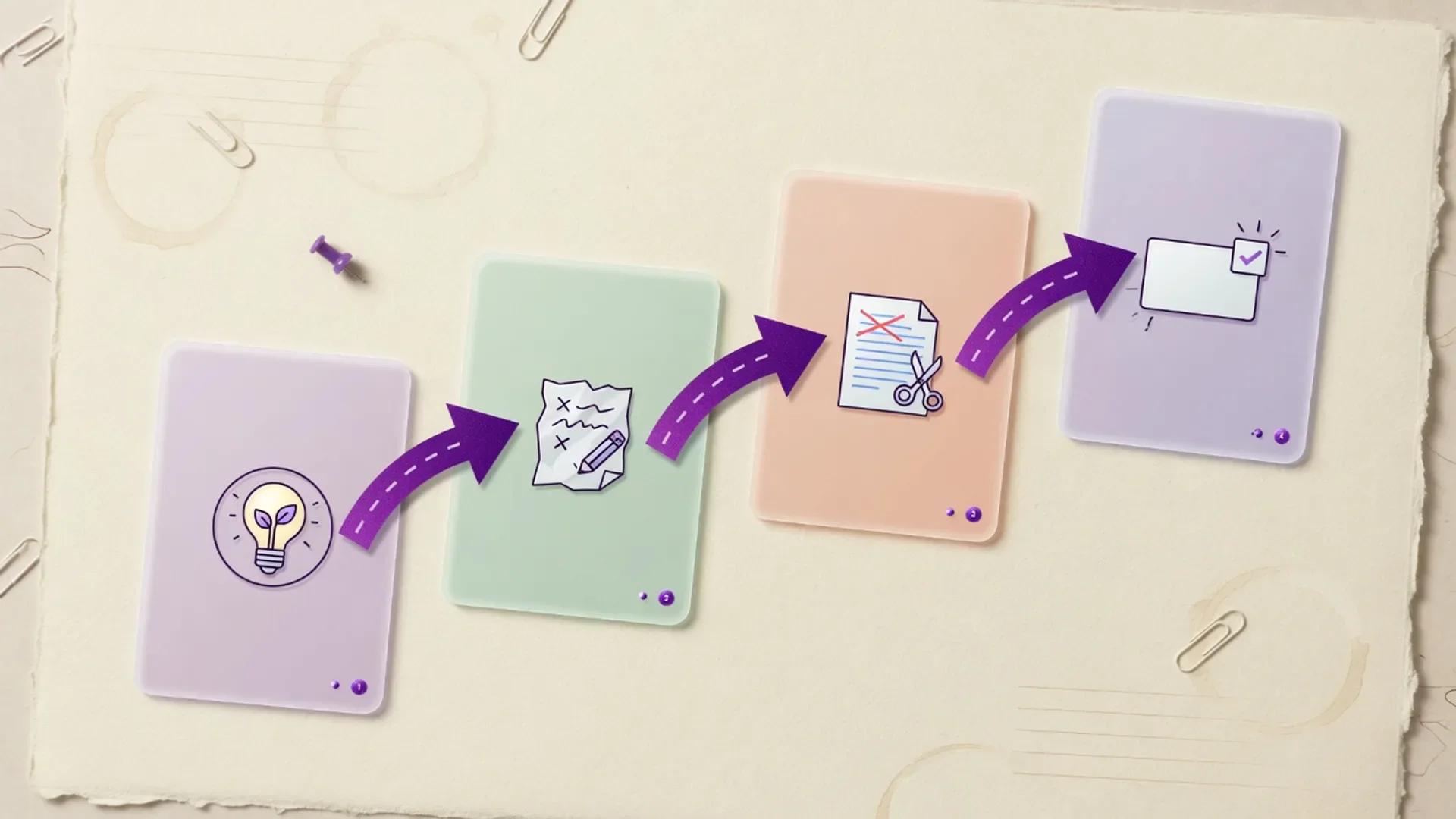
AI Content Marketing Pipeline
A human-led AI content marketing pipeline for turning audience evidence into cited, on-brand campaigns and measurable demand.

Customer Support AI Workflow
A practical, policy-first customer support AI workflow for triaging tickets, drafting replies, grounding agents in your knowledge base, and closing the loop with CRM context and automation, while keeping humans responsible for high-risk resolutions.
Still deciding?
Browse more head-to-heads
Compare more tools side by side, or explore alternative shortlists.