
Alternatives guide
Best Zapier Alternatives in 2026
Looking past Zapier for workflow automation in 2026? These five alternatives cover visual scenario building, self-hosted execution-based pricing, enterprise iPaaS, Microsoft-native flows, and open-source AI automation — without invented rankings.
Best Zapier Alternatives in 2026
Context
Why people look for alternatives
Teams evaluate Zapier alternatives for lower cost at scale, visual scenario builders with branching, self-hosting for data residency, enterprise governance, or first-class AI agent tooling already included in another platform.
Options
Alternatives


Cloud and desktop automation already bundled into Microsoft 365, with attended and unattended RPA.
Best for · Organizations standardized on Microsoft 365, Dataverse, and Teams that want flow licensing included.
Open-source (MIT) automation with a free forever tier, AI steps, and self-hosting for data residency.
Best for · Startups and regulated teams that want a Zapier-style builder they can run on their own servers.
Shortcuts
Quick picks
Best overall
Best lower cost
Best free
Best for teams
Best specialist
Questions
FAQ
01
What is the best Zapier alternative in 2026?
01
What is the best Zapier alternative in 2026?
Make is the closest Zapier alternative for most teams thanks to a visual scenario canvas, 3,000+ apps, and granular branching. n8n is the strongest pick if you want execution-based pricing or self-hosting, and Activepieces is the best free option.
02
Is there a truly free alternative to Zapier?
02
Is there a truly free alternative to Zapier?
Yes. Activepieces is free forever on cloud and on-prem, n8n Community Edition is free when self-hosted, and IFTTT keeps a usable free tier for personal Applets. Each free tier caps users, executions, or supported apps.
03
Which Zapier alternative is cheapest at scale?
03
Which Zapier alternative is cheapest at scale?
n8n charges per workflow execution, not per task, so a 200-step AI agent costs the same as a 2-step Zap. Activepieces Plus costs $16 per month billed yearly with pay-as-you-go overage. Both usually beat Zapier task-based billing once you cross a few thousand tasks a month.
04
Can I self-host a Zapier alternative?
04
Can I self-host a Zapier alternative?
Yes. n8n and Activepieces both ship MIT-licensed or source-available Community Editions you can run on your own servers. Make offers an on-prem agent for enterprise customers only; Zapier is cloud-only with no self-hosting option.
05
Which Zapier alternative is best for enterprise governance?
05
Which Zapier alternative is best for enterprise governance?
Workato is the strongest enterprise pick with SAML SSO, SCIM, role-based access, dedicated recipe lifecycle management, and pre-built recipes for Workday, ServiceNow, SAP, and Salesforce. Microsoft Power Automate is the right answer if your stack is already Microsoft.
06
Does Zapier still have the largest app directory?
06
Does Zapier still have the largest app directory?
Yes. Zapier advertises more than 9,000 connected apps and 30,000+ actions. Make lists 3,000+ apps, n8n lists 1,000+ integrations plus community nodes, and Pipedream lists 3,000+ sources. For very long-tail SaaS, Zapier still wins on raw count.
07
What is the difference between Zapier and an iPaaS like Workato?
07
What is the difference between Zapier and an iPaaS like Workato?
Zapier is a no-code automation tool aimed at business users and small teams. An iPaaS like Workato adds enterprise governance, embedded integrations, B2B/EDI, API management, and dedicated support that larger IT teams require.
Deep dive
Full guide
Best Zapier Alternatives in 2026
If you are searching for Zapier alternatives in 2026, you are not alone. Zapier still leads on raw app count, but teams keep leaving for cheaper per-execution pricing, deeper visual scenarios, self-hosting, and enterprise governance the original platform was never built for. I dug through vendor pricing pages, Wikipedia, vendor blogs, and comparison hubs to put together an editorially researched shortlist. This is not a hands-on ranking — it is fit-based guidance with sources you can verify yourself.
Quick take. Zapier prices by the task. Every successful Zap step counts. Make charges per operation and gives you a visual canvas. n8n charges per full workflow execution. Workato is enterprise iPaaS. Power Automate ships with Microsoft 365. Activepieces is open source with a real free tier. Pick the one whose pricing model matches your workload shape.
How to choose a Zapier alternative in 2026
Start with three questions. Where does your data live? How many steps does a typical workflow run? Do you need self-hosting for compliance?
- Visual multi-app scenarios with branching → Make
- Code-friendly, self-hostable, execution-based pricing → n8n
- Microsoft 365 plus desktop RPA → Microsoft Power Automate
- Enterprise iPaaS with SAP, Salesforce, ServiceNow recipes → Workato
- Open source, free tier, AI steps → Activepieces
Match the tool to the constraint that hurts most — cost, residency, governance, or app coverage.
Comparison table: Zapier alternatives at a glance
| Tool | Free tier | Entry paid plan | Pricing model | Self-host | Notable app count | Best fit |
|---|---|---|---|---|---|---|
| Zapier | 100 tasks/mo, 2-step Zaps | Pro from $19.99/mo (750 tasks) | Per task | No | 9,000+ apps, 30,000+ actions | Broadest app catalog, simple Zaps |
| Make | 1,000 credits/mo | $9/mo for 5,000 credits | Per operation (credit) | Enterprise on-prem agent only | 3,000+ apps | Visual scenarios with branching |
| n8n | Self-hosted Community Edition | €20/mo for 2,500 executions | Per workflow execution | Yes (MIT / source-available) | 1,000+ integrations + community nodes | Developers and platform teams |
| Workato | Trial | Custom (Enterprise) | Per recipe / per task | No (cloud) | 1,000+ enterprise apps | Mid-market and enterprise IT |
| Microsoft Power Automate | 30-day trial | Premium $15/user/mo | Per user or per bot | No (cloud) | 1,000+ standard and premium connectors | Microsoft 365 shops |
| Activepieces | Free forever (cloud and on-prem) | Plus $16/mo (annual) | Credit-based with overage | Yes (MIT) | 700+ pieces | Startups and regulated teams |
All plan details above are pulled directly from each vendor’s current public pricing page as of July 30, 2026. Pricing on Zapier’s site is task-tiered with both monthly and annual options; n8n’s annual prices reflect a 17% discount versus monthly.
Make (formerly Integromat): the closest visual peer
Make is the closest peer to Zapier if your pain is branching, data transforms, and visual clarity. Each module action costs one credit, and scenarios run on a canvas where you can see every route side by side.
Pricing snapshot. Make’s Free plan gives you 1,000 credits per month with two active scenarios and a 15-minute minimum interval between scheduled runs. The Make Pro plan starts at $9 per month for 5,000 credits and unlocks unlimited active scenarios, custom variables, 300+ Make API endpoints, and full-text execution log search. Enterprise plans are custom and add 24/7 support, overage protection, and an on-prem agent. According to Make’s pricing page, every 10,000 monthly credits unlocks 5 GB of data transfer and 10 MB of data storage.
Why teams switch from Zapier. Make’s router and iterator modules make branching far easier to draw than Zapier’s linear Paths. The visual canvas also makes multi-step scenarios easier to debug. n8n’s comparison page makes the same point: Make treats scenarios as visual flowcharts, which is great for clarity but harder to extend with code than n8n.
Where it falls short. Every module action burns a credit, so a loop over hundreds of records can drain a budget. The vendor’s own docs confirm that credit usage scales with complexity, not just run count.
n8n: execution-based pricing and self-hosting
n8n is the developer favorite on this list. It is source-available under the Sustainable Use License, ships a free self-hosted Community Edition, and charges Cloud customers per full workflow execution rather than per step.
Pricing snapshot. The Starter Cloud plan starts at €20 per month billed annually for 2,500 workflow executions with five concurrent runs and 2,300 AI credits per month. The Pro plan is €50 per month for 10,000 executions and adds global variables, admin roles, and up to 13,700 AI credits per month. The Business plan for self-hosted instances is €667 per month for 40,000 executions and adds SAML SSO, Git version control, and 30 days of insights. Enterprise is custom and adds 200+ concurrent executions, 365 days of insights, log streaming, and external secret stores.
Why teams switch from Zapier. You can drop JavaScript or Python into any node, self-host for GDPR or HIPAA workloads, and use the LangChain nodes to build multi-agent AI systems. n8n’s own vs-Zapier page argues that execution-based pricing means a 200-step AI agent costs the same as a 2-step Zap, which becomes decisive once you automate anything beyond simple triggers.
Where it falls short. n8n’s Cloud plans are still cheaper than Zapier at most volumes, but you trade Zapier’s polished UX for a steeper learning curve. Code steps assume basic JavaScript, and error handling is your responsibility unless you wire dedicated error workflows.
Microsoft Power Automate: the Microsoft-bundled choice
If your shop already runs on Microsoft 365 and Teams, Power Automate ships with licensing you may already own. It splits cleanly into cloud flows (DPA) and desktop flows (RPA) with separate per-user and per-bot licensing.
Pricing snapshot. Premium costs $15 per user per month paid yearly for attended cloud flows, attended desktop flows, and 50 MB of process mining. Process licensing runs $150 per bot per month for unattended RPA. Hosted Process is $215 per bot per month for unattended bots running on Microsoft-hosted Azure VMs. A Process Mining add-on costs $5,000 per tenant per month and adds 100 GB of process mining storage. Microsoft also sells Copilot Studio separately for $200 per month for 25,000 Copilot Credits.
Why teams switch from Zapier. If you are already paying for Microsoft 365 E3 or E5, the marginal cost of adding Power Automate is often zero. Power Automate also handles attended and unattended desktop RPA, which Zapier does not. The Microsoft connector ecosystem includes Dataverse, SharePoint, Outlook, Teams, and Excel — apps many enterprises already standardize on.
Where it falls short. Premium connectors are restricted on the lower tiers, so you can hit walls fast if you need to connect to non-Microsoft SaaS. Cross-cloud governance is improving, but the platform still feels Microsoft-first.
Workato: enterprise iPaaS with governance
Workato is the option to pick when you need an iPaaS rather than a no-code automation tool. Its differentiators are embedded integrations for SaaS vendors, recipes for enterprise systems, and governance features aimed at IT teams.
Pricing snapshot. Workato publishes “Pricing built for flexibility” and routes enterprise customers through sales. The platform supports Workato Embedded, which lets SaaS companies ship integrations under their own brand. Workato’s recipe library covers Salesforce, Slack, Marketo, NetSuite, ServiceNow, and Workday as featured connectors, and the platform sells editions for IT, finance, support, HR, sales, and revenue operations.
Why teams switch from Zapier. Workato’s enterprise recipes are pre-built and tested for systems like SAP, Workday, ServiceNow, Coupa, and Infor M3. Audit logs, role-based access control, and dedicated recipe lifecycle tooling fit how large IT teams already work. Workato also sells B2B/EDI, API management, and an MCP Gateway — features Zapier does not match.
Where it falls short. Pricing is opaque. You need a sales conversation to get a real number, which slows evaluation. For teams under 100 employees, Workato is usually overkill.
Activepieces: open source with a real free tier
Activepieces is the youngest tool on this list. It was founded in 2022, went through Y Combinator’s Summer 2022 batch, and is MIT-licensed. The headline pitch is simple: open-source automation with a forever-free cloud tier and self-hosting for everyone.
Pricing snapshot. Activepieces Free is free forever on cloud or on-prem with daily credits and unlimited flows. Plus costs $16 per month billed yearly with monthly credits and pay-as-you-go overage. Team costs $166 per month billed yearly for 25 users, SSO, standard roles, and email support. Ultimate is custom and adds yearly credits, SCIM, custom RBAC, audit logs, secret managers, event streaming, private pieces, Git Sync with releases, and dedicated support.
Why teams switch from Zapier. The free tier is real. You can ship a production flow on Activepieces Free, then graduate to Plus for $16 per month and only pay extra if you exceed your monthly credit allowance. The GitHub repo is MIT-licensed, so you can fork it, audit it, or run it on a Raspberry Pi. The pricing page also confirms that Activepieces has 700+ integrations with active customers including MoneyGram, PostHog, and Alan.
Where it falls short. Activepieces has the smallest app catalog on this list at 700+ pieces, and the community is smaller than Zapier’s. Some enterprise niceties (SCIM, custom RBAC, audit logs, private pieces) only show up on the Ultimate tier.
What about IFTTT, Tray.io, and Pipedream?
I focused the shortlist on the five strongest fits, but three more Zapier alternatives come up constantly in 2026.
- IFTTT still works best for personal automations, smart home, and small-business Applets. Pricing is $0 free, $2.99 per month for Pro (billed $35.88 annually), and $8.99 per month for Pro+ (billed $107.88 annually) with filter code, queries, AI services, and multi-account connections.
- Tray.ai sells Pro, Team, and Enterprise tiers with 700+ connectors, low-code workflow building, and a Merlin Agent Builder for AI agents. Tray targets integration-led enterprise teams and is priced through sales.
- Pipedream uses credit-based pricing, where one credit equals 30 seconds of compute at 256 MB. Pipedream Workflows and Pipedream Connect both bill through the same credit system, with separate pricing for end users on Connect.
Each is worth a trial if its strengths match your stack.
How does Zapier stack up in 2026?
Zapier is still the largest automation directory. The company’s own ecosystem page lists more than 9,000 connected apps, and a 2026 Zapier blog post on MCP confirms the catalog includes 30,000+ actions. Wikipedia’s 2026 entry on Zapier pegs the headcount at around 730 and references the 66,000 individual triggers and actions exposed across the ecosystem. Zapier’s last confirmed private valuation was $5 billion in 2021 after a Sequoia-led secondary.
What changed in 2026 is the bill. Zapier’s own pricing reference describes a task-tier system where every successful step in a Zap and every programmatic call through Zapier MCP draws from the same shared task pool. Going over your tier triggers pay-per-task billing at 1.25x base on annual plans and 2.5x base on monthly plans, with usage pausing once you hit 3x your subscription. The annual discount is 33% off the monthly rate.
If your workload is mostly linear and you stay under a few thousand tasks a month, Zapier is still fine. Once your team builds branching flows, loops over hundreds of records, or AI agents with tool calls, the task model punishes you for building the workflow you actually need.
Frequently asked questions about Zapier alternatives
What is the best Zapier alternative in 2026?
Make is the closest Zapier alternative for most teams because it offers a visual scenario canvas, 3,000+ apps, and granular branching. n8n is the strongest pick if you want execution-based pricing or self-hosting. Activepieces is the best free option thanks to its open-source foundation and forever-free tier.
Is there a truly free alternative to Zapier?
Yes. Activepieces is free forever on both cloud and on-prem with unlimited flows. n8n Community Edition is free when self-hosted. IFTTT keeps a usable free tier for personal Applets. Each free plan caps users, executions, or supported apps, but they are real production-ready tiers rather than trials.
Which Zapier alternative is cheapest at scale?
n8n charges per workflow execution, not per task, so a 200-step AI agent costs the same as a 2-step Zap. Activepieces Plus costs $16 per month billed yearly with pay-as-you-go overage at $0.007 per extra credit. Both usually beat Zapier’s task-based billing once you cross a few thousand tasks per month.
Can I self-host a Zapier alternative?
Yes. n8n and Activepieces both ship MIT-licensed or source-available Community Editions that run on your own servers. Make offers an on-prem agent for enterprise customers, but scenarios still execute in Make’s cloud. Zapier does not offer self-hosting at any tier.
Which Zapier alternative is best for enterprise governance?
Workato is the strongest enterprise pick thanks to SAML SSO, SCIM, role-based access control, dedicated recipe lifecycle tooling, and pre-built recipes for Workday, ServiceNow, SAP, and Salesforce. Microsoft Power Automate is the right answer if your stack is already Microsoft 365 and Dataverse.
Does Zapier still have the largest app directory?
Yes. Zapier advertises more than 9,000 connected apps and 30,000+ actions. Make lists 3,000+ apps, n8n lists 1,000+ integrations plus community-built nodes, Pipedream lists 3,000+ sources, and Activepieces lists 700+ pieces. For very long-tail SaaS, Zapier still wins on raw count.
What is the difference between Zapier and an iPaaS like Workato?
Zapier is a no-code automation tool aimed at business users and small teams. An iPaaS like Workato adds enterprise governance, embedded integrations, B2B/EDI, API management, MCP gateway, and dedicated support that larger IT teams require.
How I picked these five
I scored each tool on three criteria: pricing transparency, depth of self-serve documentation, and verifiable 2026 data. I pulled pricing directly from each vendor’s published pricing page and cross-referenced each figure against at least one secondary source. I dropped tools where I could not verify current 2026 numbers.
Tools I considered but did not include in the shortlist: HubSpot AI, Notion AI, ChatGPT, and Salesforce Einstein. Those are covered in the broader Zapier AI alternatives piece because they solve a different problem — embedding AI inside an existing platform — rather than replacing Zapier’s cross-app automation.
Final advice
Pick the constraint that hurts most and let it drive your choice:
- App coverage breadth → stay on Zapier.
- Visual branching on a canvas → Make.
- Execution-based pricing and self-hosting → n8n.
- Already deep in Microsoft 365 → Power Automate.
- Enterprise governance and embedded iPaaS → Workato.
- Open source and free forever → Activepieces.
Run three real workflows end to end on each finalist before signing anything. Connector coverage, error handling, admin controls, and total cost at your volume will tell you more than any review.
Catalog
Products in this guide

Make
Editorially ResearchedVisual AI automation platform for building complex multi-app scenarios and AI agents on a transparent canvas.
Stands out · A visual AI automation canvas where next-gen Make AI Agents, MCP, and Make Grid observability ship together on every paid plan — purpose-built for complex, multi-app workflows.

n8n
Editorially ResearchedFair-code AI workflow automation for technical teams, with self-hosting, code steps, and an execution-based pricing model.
Stands out · Technical, self-hostable AI workflow automation with code-friendly nodes, MCP support, human-in-the-loop controls, and execution-based cloud economics—now embedded inside SAP Joule Studio.
Related
Keep exploring
Zapier AI vs n8n
Pick Zapier AI when business users need the fastest path to a working automation across 9,000+ mainstream SaaS apps. Pick n8n when engineers want code, self-host, and execution-based pricing for complex or high-volume AI workflows.
Zapier vs Make
Choose Zapier for fast wins, the largest connector catalog, and team-friendly governance. Choose Make when scenarios get visually complex, when you want AI agents inside the same canvas, and when credits-per-action beat tasks-per-step on the bill.
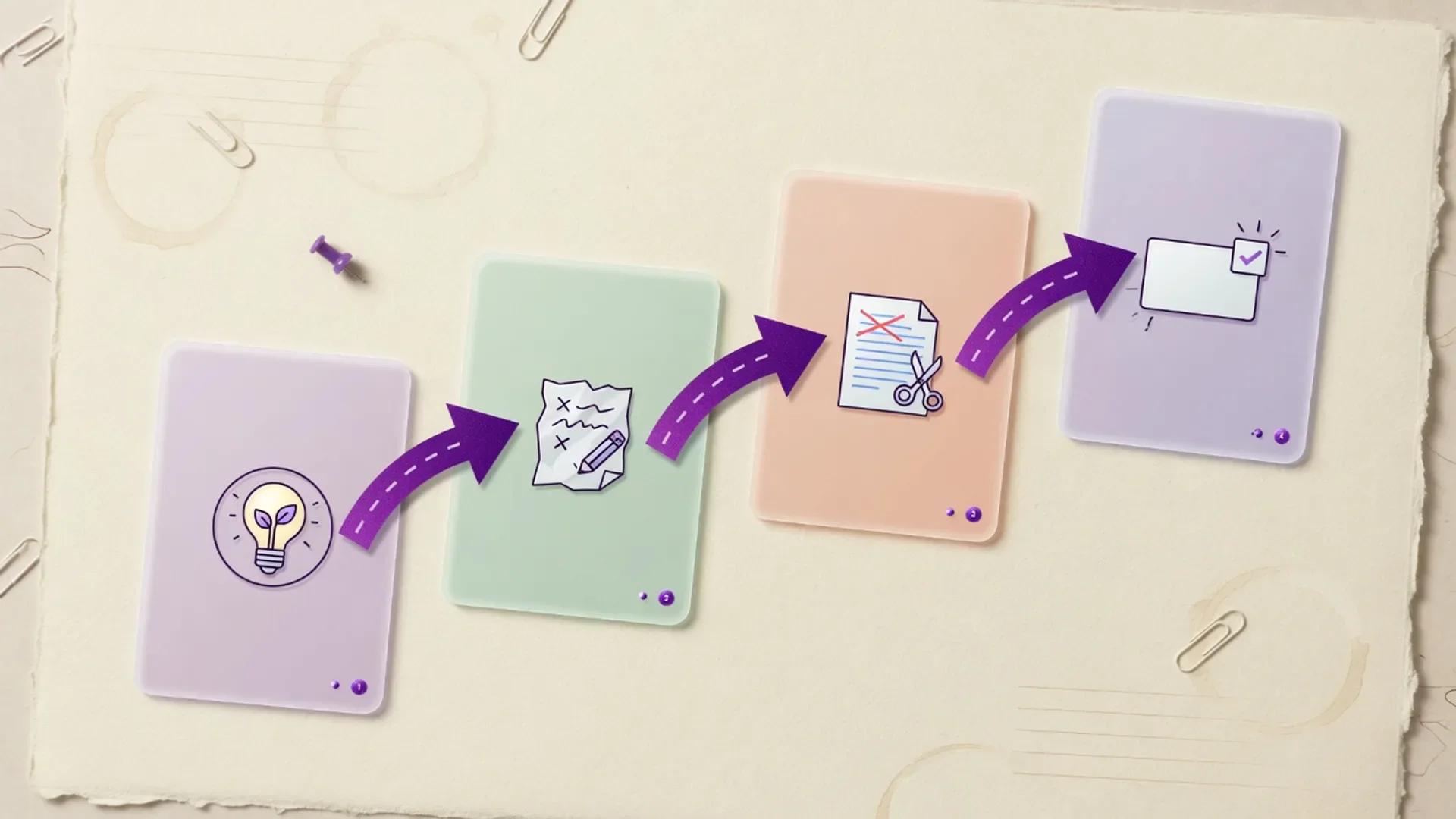
AI Content Marketing Pipeline
A human-led AI content marketing pipeline for turning audience evidence into cited, on-brand campaigns and measurable demand.

Founder Weekly Ops AI Workflow
A practical multi-step weekly operating rhythm for founders and solopreneurs who use AI to research, plan, ship content and outreach, and keep light CRM and automation hygiene—without inventing metrics or outsourcing judgment.

Sales Pipeline AI Workflow
A practical multi-step workflow for researching accounts, drafting outreach, managing CRM hygiene, and advancing deals with AI—while keeping humans responsible for relationship truth and commitments.

Best Make Alternatives in 2026
Looking for a Make.com alternative in 2026? I compared Zapier, n8n, Workato, Microsoft Power Automate, Pipedream, Tray.ai, and IFTTT on price, AI features, self-hosting, and migration pain. No fake rankings.

Best n8n Alternatives in 2026
The best n8n alternatives for workflow automation in 2026, covering Zapier, Make, Workato, Pipedream, Activepieces, and Microsoft Power Automate for teams that want less self-hosting, broader no-code coverage, or different pricing models.
Next step
Compare options side by side
Open head-to-heads, or review the primary product profile.